Iran is a different place
(REFLECTIONS OF A VISIT TO IRAN)
Iran was the country of all what is shown on the media for our family at first. When we decided to choose this country as our next destination, we really didn’t know what exactly is waiting for us. Right after returning home, my mind was just busy with remembering all the good memories.
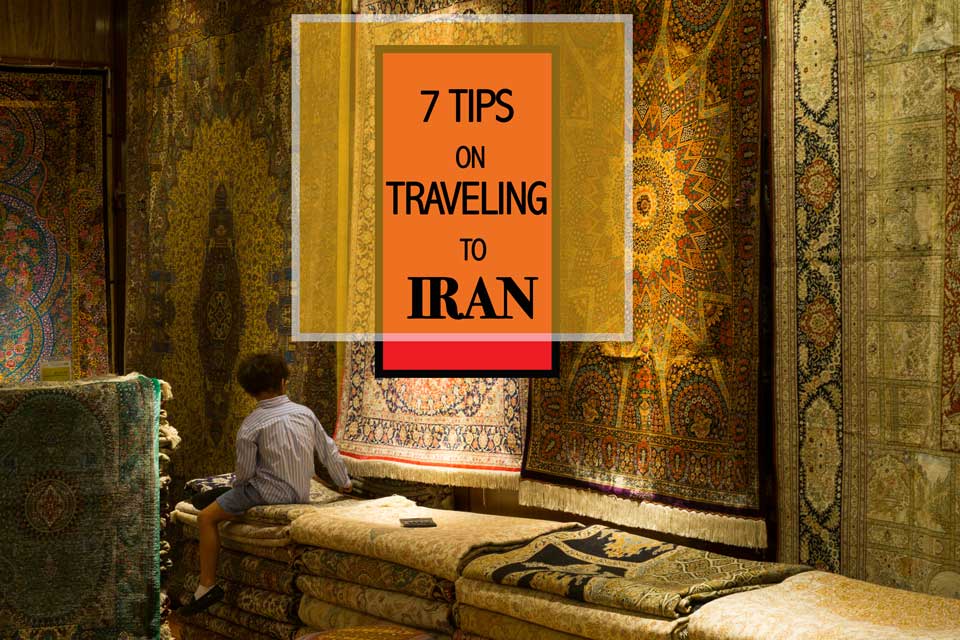
Here I write down some 7 Top Tips on Visiting Iran after traveling to the ancient land of Persia or simply saying Iran. Hope all the info is useful for you too.
You will read these topics respectively:
- Trafic in Iran
- Currency and Money in Iran
- Iranian People are Kind
- Iran Culture and Architecture
- Bazaar in Iran
- Iran is Safe
Tip number one in visiting Iran surely goes to the traffic in the country.
It was scary. Nothing prepares you for Tehran traffic. My fear was palpable as our taxi driver came within centimeters of yet another car. I instinctively pulled my arm away from the open car window but the adjacent car quickly pulled away. Not a word, not even a hoot was exchanged between the two drivers. My blood pressure barely had time to stabilize when another potential car accident scenario presented itself. When I did not hear the anticipated crashing sound, I slowly opened my eyes and saw that we were perfectly safe. There was no problem. Traffic moved seamlessly forward.
While there are the obvious road signs (like demarcated lanes), Iranian drivers seem to rely on a complex, well understood, internalized yet unwritten communication system which seems perilous to outsiders but is completely safe in reality. What was more amazing was when our young Tehran tour guide stepped onto the busy road and brought traffic to a halt so that we could cross the road, just by pointing her index figure, so that we could cross the road. Apparently, pedestrians have right of way. That’s when I realized that this is a different place. This is the enigma of Iran. What you see or hear is not what you get. What seems chaotic and strange is simply another way of doing things.
2. Currency and Money in Iran
The currency is a case in point. The Iranian rial is printed in absurdly high denominations but the locals use a simpler “toman” currency value. Hence one currency note can be interpreted with two different values (not so easy for the foreigner who does not know which value is being advertised). Added to this I still had to convert to a dollar value and back to my local South African currency. This was a nightmare and after the second day I gave up and left this to my more cerebrally gifted daughter.
We traveled on a Budget tour.
3. Iranian People Are Kind
My preconceived view of Iran was seriously challenged by our long haired Iranian guide who insisted on blasting “western-style” pop music in his car. He was no different from the vocal, free thinking young men that I’ve seen in many countries. I had made a mental note not to make eye contact with the women in accordance with Islamic traditions. However the majority of women in the cities were far from the stereotyped chador-clad, reticent women I had imagined them to be. Instead they were a living advertisement that vanity is alive and well in Iran just as it is in any other country. The half-shaven upwardly arched eyebrows and blonde hair barely covered by a headscarf seemed to be the aspirational beauty norm. It was hard not to stare at the many people (both male and female) with plasters on their noses, an indication of recent “nose jobs” which is seemingly common practice here.
I was apprehensive about being a Sunni Muslim in Iran during this time of escalating tensions between Sunni’s and Shiites in neighboring Iraq. There was no need. Although conversations were quickly maneuvered to subtly establish whether you are Sunni or Shi’a, this was done primarily to establish boundaries and to prevent conflict. There was no hostility but a feeling of being an outsider still remained. When I visited one of the holiest shrines in Shiraz, we (like other targeted foreigners) were welcomed by representatives from “International Relations”. Their professionalism, hospitality and skill was remarkable and evident in the way we were welcomed, hosted, assisted (for which we were grateful) and then diplomatically taken to a “less important” tomb in the complex rather than to the main tomb. I respect their choices regarding “outsiders” and I have no problem with it. What I am highlighting is the sophisticated and charming manner in which Iranians deal with potential conflict here.
My head was pounding. Where were the aggressive and argumentative Iranians who I have seen in the media over the years? If they were there, they were hard to find. Diplomacy has evolved into an art form here. Conversations involving politics, religion and other contested topics were efficiently skirted. While being understandably guarded about their privacy as an act of self-preservation, Iranians showed a genuine interest in the lives of their visitors. The Iranians who we met were pleasant, affable and hospitable people. I was particularly taken aback by the kindness of a random stranger who took it upon himself to assist us when we were “lost” in between a bus transfer from Tehran to Isfahan. He not only gave me his cell phone to use (I did not have an Iranian sim card) but he personally escorted us (even carried one of our large bags) and ensured that we were on the right bus.
4. Iran Culture & Architecture
There are numerous museums and palaces in the major cities to keep you occupied for hours. My personal favorite is the small Ceramic and Glass museum in Tehran with its innovative display of artifacts incorporated into the design of the building itself. I will spare you a description of all these places as this can be readily found in any good travel book or on the internet. I had chosen my own itinerary to include places of special interest to me. Being in the presence of ancient artifacts both humbled me and reminded me of the fleeting nature of human life. Iran is a treasure trove of historical artifacts and I felt deeply privileged to see some of these with my own eyes.
I often felt the overwhelming desire to physically touch and thereby connect with these priceless relics but I was rightly advised by my guide not to. The imprints of successive empires are everywhere. I took the time to walk slowly and allowed myself to be absorbed in the aura of a bygone era. The buildings soon came alive, with evidence of the vicious removal and replacement of vestiges of dynastic power with each successive ruler. How could I not be moved by these grand representations of power struggles? No matter which palace you choose as your favourite, one thing is certain – the Persian Shahs had an abundance of wealth and were not afraid to show it.
“Isfahan”, “Esfahan”, “Ispahan” are all acceptable spellings of this beautiful city and it makes perfect sense. Just as there are many spellings, there are many facets to this city. Every evening as I walked down the main charbagh road, the ambience allowed me to imagine this place in its heyday. The flowing waters along the lush gardens, the high society office bearers in their finery – it is all too easy to imagine. Mercifully the need to attend to other vital activities (like eating) brought me out of my self- induced dream world – much to the relief of my fellow companions. The Unesco world heritage sites, especially the Naqsh-e-Jahan square with its triad of royalty (AliQapu palace), religion (tawny dome coloured private Shaik Lutfullah mosque and the public Jameh mosque) and commerce (Qeysarriyeh bazaar) are a treat for the eyes.
What is more important, is the way that they invite you to engage with them so that they become a treat for the soul. The glare of the brightly coloured “7 colour” tiles compete with the elegance of Arabic calligraphy from the Quran. The extensive mirror work which was introduced as a “European” aspiration is now assimilated comfortably in the architectural psyche. In reality, the famous Safavid turquoise, mosaiced mosque domes were more beautiful than any photographs that I had seen of them. But it was the multi-faceted architectural muqurnas that feature on most buildings that grabbed my attention. Each facet is decorated in a variety of ways to present a “story” within a “story”. This sensory overload fascinated me and at the same time threatened to push my over-taxed imagination into overdrive. I happily surrendered many times.
I was less than enthusiastic when I saw that my itinerary included a visit to 3 bridges. Old bridges? Really? But my mind changed when I saw the beautiful Safavid inspired bridges over the Zayande rood river in Isfahan. Illuminated at night, they presented a romantic vision of lit archways alternating with arched shadows. The effect is mesmerizing. I understood why pictures of the Khaju bridge in particular were found in almost every tourist book on Iran. The romantic ambience of this place makes it a popular meeting place for young couples. Was it possible that I overheard snippets of Iran’s celebrated poets (Hafiz/ Sa’adi) being coyly whispered?
We traveled on a Budget tour.
5. Bazaar in Iran
You wouldn’t want to miss the bazaar experience in Iran. It was an all-out assault on the senses –the incessant banging of the metal-work artists, heady fragrance of perfume sellers, aromatic wafts from brightly coloured and unfamiliar spices, variety of sweets that are guaranteed to break the resolve of any dieter, haggling for bargains and the jostling of crowds – it’s all there. Ancient market places can also be found elsewhere in the Middle East but in Iran the lack of American/European branded merchandise (except for the few knock-offs) and the lack of the ubiquitous Chinese imports, is refreshing. The touristy souvenirs are there but there is no “made in China” label on them, although you may want to check if there is a “made in Korea” label. Creativity seems to be part of the national psyche. There does not seem to be a single thing that has escaped elaborate ornamentation. As I walked aimlessly through the bazaars, I knew for certain that I would never be able to find my way back through the intricately inter-leading labyrinthine passageways. I did not mind this at all.
6. Iran Is Safe
As I left Iran, I was struck by how little I knew of Iran and that I would be back in a heartbeat if I could. There is one thing that I’m sure about; I left Iran thinking of it as a different place from what I had expected it to be.
Read more about the safety of Iran.
Written by Dr Shabier Omar