Iran, one of the oldest continuous civilizations in the world, has had a significant impact on the human race for over 7,000 years. The ruins of Persepolis, the majestic presence of Hafez and Rumi, and the brilliant diversity of Iran are all aspects that few countries may compete with.
There are Persians, Azeris, Kurds, Baluchis, and numerous others living together. Each one of them has a unique language, music and customs. So, what exactly are Iran culture and traditions like, and what makes this country so uniquely captivating?
This guide details the different aspects, namely Iran culture and history, religion, clothing, food, festivals, and modern life. The journey will reveal to you the reasons why Iran is still one of the most remarkable places on the planet.
Iran Culture and History — A Civilization Shaped Over Millennia
Iran culture and history originated with the Elamite kingdoms and Medes, but came into world awareness during the Achaemenid Empire (550330 BCE). Cyrus the Great established the largest empire that was ever witnessed and encouraged tolerance and human rights- ideas that are engraved on the famous Cyrus Cylinder. Persepolis continues to be the testament of that greatness.
The Parthian and Sassanid empires perfected art, science and administration to form a powerful Persian identity. The Arab conquest in the 7th century brought about the introduction of Islam. This did not replace the traditions, but was integrated into them.
The Islamic Golden Age was later driven by the Persian poets and scholars. Under the Safavid rule (1501-1736), Shiism was established as the official religion that left a permanent mark on the national identity. Since ancient monarchies and contemporary revolutions, the Iran culture and history reveal a nation that is constantly reinventing itself and preserving its soul.
Iran Culture and Religion
Iran culture and religion are inseparably linked and religion is the main factor in that connection. Shia Muslims make up around 90–95% of the Iranian population and in other countries, Iran is the only country where Shiism is an officially accepted religion. This has a strong impact on the country’s architecture, the rites of mourning in the month of Muharram, and the general atmosphere of religiousness in the society.
Moreover, Iran gives Christians, Jews, and Zoroastrians the status of protected minorities by law. In the city of Yazd, where the ancient fire temples are still in use, in the city of Isfahan, where the beautiful Armenian churches are located in the Jolfa district, and in the city of Hamadan, where the Jewish pilgrims visit the tomb of Esther, the religious influence can be easily observed in the daily lives of the people.
The greetings (“Ya Ali”), helping the needy, and the mosques with their turquoise domes that have become the symbols of the nation are some of the places where religious influence is most clearly seen.
Traditional Clothing in Iran
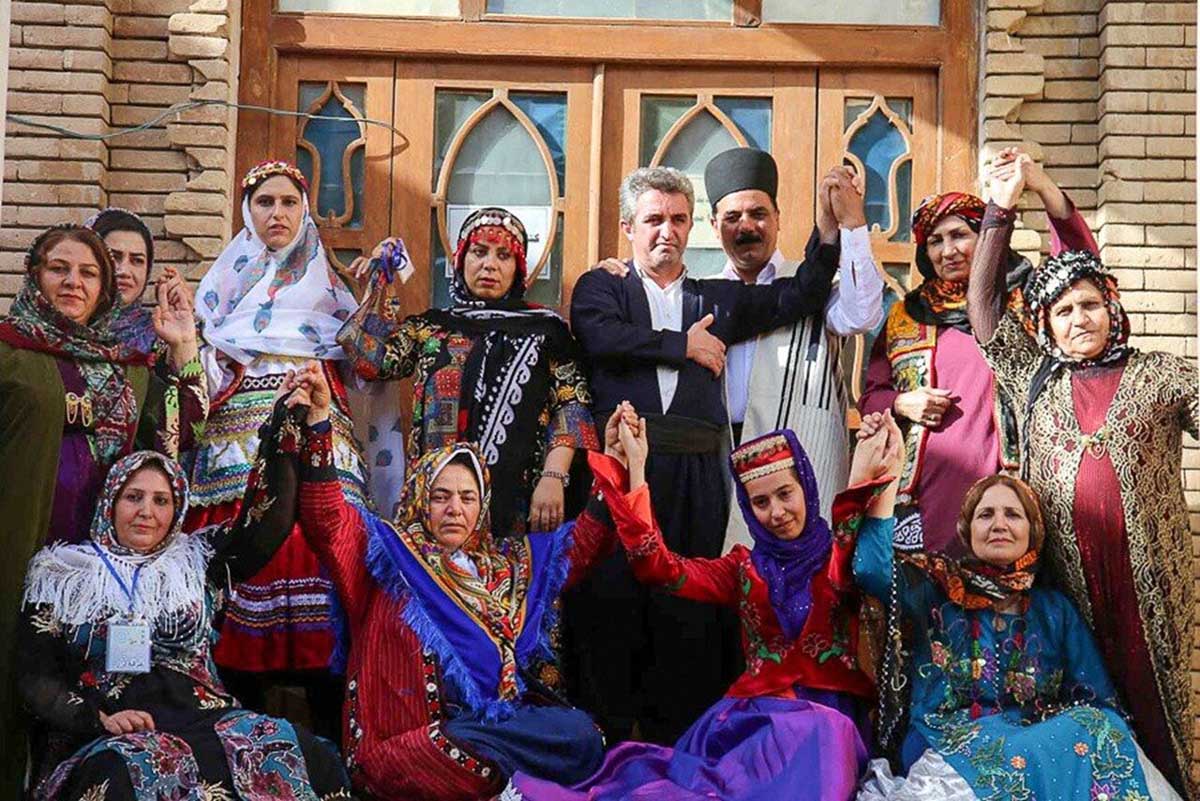
The ethnic and climatic diversity is vividly observed in Iran cultural clothing. Cities have Islamic dressing (hijab and loose covering of women, modest dressing of men), whereas in rural areas and tribes, they are glitteringly colorful.
The dresses of the Kurdish women are covered with layers of skirts with elaborate headpieces, and Baluch women are skilled at embroidering large trousers and bright headscarves. Turkmen women wear heavy silver or jewelry and deep red robes, while Caspian Gilakis prefer bright, multilayered skirts.
The Bandari women of the Persian Gulf coast have their masks and flowing dresses embroidered, which are influenced by the African and Indian Ocean cultures. The dress of men is also quite noticeable; in Kurdistan, it is felt vests, in Qashkai it is colored hats, and in Turkmenistan, it is sheepskin telpeks so high. Nomadic encampments and tribal festivals are where you can see human wearable art at its best.
Iranian Food Culture — A Taste of History
Iran culture food is elaborate, aromatic and highly geographical and seasonal. Rice and bread are sacred; nothing is complete without either of the two. Everyone at the table struggles over the crispy golden tahdig, the scorched rice at the bottom of the pot.
Signature foods such as Ghorme Sabzi (slow-roasted herb stew with lamb, beans, and dried limes), Fesenjan (chicken or duck in thick pomegranate-walnut gravy), and many variants of kebab, such as jujeh (chicken), koobideh (minced lamb), and chenjeh (lamb pieces), are served.
The geography determines the taste: caviar and smoked fish of the Caspian, pistachios of Kerman, dates of Bushehr, saffron of Mashhad and pomegranates of Saveh. Spices are applied in moderation- saffron, turmeric, dried lime, and “advieh blends” (mix spices) are mixed to form a delicious aroma rather than heat.
Most Iranians are obsessed with tea, which is strong, steaming, and served with sugar cubes in the mouth. Each neighborhood bakery makes four traditional breads: Sangak that is baked on river pebbles; Barbari that is thick and oval; Lavash that is thin and flexible; and Taftoon that bears beautiful patterns. Sharing food is like sharing love, according to Iran culture and traditions.
Iranian Traditions and Customs
Iran traditions and customs center around family ties, respect and legendary hospitality. “Taarof”, the complicated politeness ritual, where parties refuse and insist upon the same action repeatedly, can confuse tourists; however, it reveals profound courtesy.
Among other Iran culture and traditions is the king-like treatment that visitors experience: the tea comes up in no time, and the food is offered up to you three times (you can refuse twice and accept the third). The most beloved cultural traditions in Iran are Nowruz (the Persian New Year at the spring equinox) and Yalda Night (Winter solstice).
Nowruz is accompanied by haft-sin tables, outdoor picnics, dancing and so on. Yalda Night is the occasion when families get together for poetry, pomegranates, and nuts until midnight. All social events, including weddings, funerals, and even casual visits, involve a proper performance of the rituals of greeting and farewell.
Modern Iranian Culture
Modern Iranian culture is full of life and vigor underneath all the Iran culture and traditions. The cafés of Tehran are full of energetic youth who are discussing movies and startups. The cultural scene is led by filmmakers who have won numerous awards, contemporary art galleries and fashion designers who are creatively changing the compulsory hijab into avant-garde statements.
The use of social media is pretty high; Instagram poets have millions of followers. There are rock-climbing gyms, vegan restaurants, escape rooms and underground music concerts, which are the manifestations of a generation that is proudly Persian yet is globally connected. In fact, creativity is breathing everywhere despite the existence of challenges.
Regional Diversity in Iranian Culture
Iran is made up of different ethnic and cultural groups that are so diverse that they can be considered a ‘mosaic’. For instance, the Azeri Turks communicate in the Turkish language and enjoy mugham music and the Kurds captivate the audience by their folk dancing accompanied by tanbur melodies.
Also, the Lors are skilled in crafting bronze artifacts using ancient techniques; the Baluchis are known for their beautiful and colorful embroidery; the Gilaks and Mazandaranis of the Caspian coast are rice farmers and enjoy matriarchal customs, and Persian Gulf Arabs are the happiest to present their infectious and African-influenced bandari dances.
It’s like every area has its own unique culture, but still, they all have the same characteristic of being very hospitable and serving tea.
Culture & Traditions in Iran for Tourists
Keep the following in mind to travel respectfully based on Iran culture and traditions:
- A handshake or a hand-on-heart gesture should be the first thing to do (same gender).
- Women must wear modest clothes—long skirts and blouses for head and body covering, while men can wear long trousers only.
- Shoes off in some houses and mosques.
- It’s better to drink tea with great enthusiasm.
- Request permission before taking pictures of people, particularly women.
- The right hand should be used for eating and giving/receiving items.
If you are looking for the richest experience, then join our expertly crafted Iran Cultural Tour in 8 Days or Iran Cultural Tour in 12 Days itineraries that lead you to homes, festivals, and hidden corners.
Conclusion
Iran culture and traditions are not merely relics of the past—they continue to manifest in daily life, e.g., through every smile, every dish of saffron rice, and the coexistence of the first Islamic prayer of the day and the song of birds at dawn.
Ancient Persian emperors communicated through stone sculptures, while adolescents perform TikTok dances in the middle of mountains. Iran indeed allows one to traverse over 7,000 years of history and yet be completely embraced.
Let us at Irun2Iran show you the real Persia. Book your trip now and discover why. after you have been a guest of the Iranians and watched the blue dome of the mosque be illuminated at sunset, no other place will ever be as appealing.