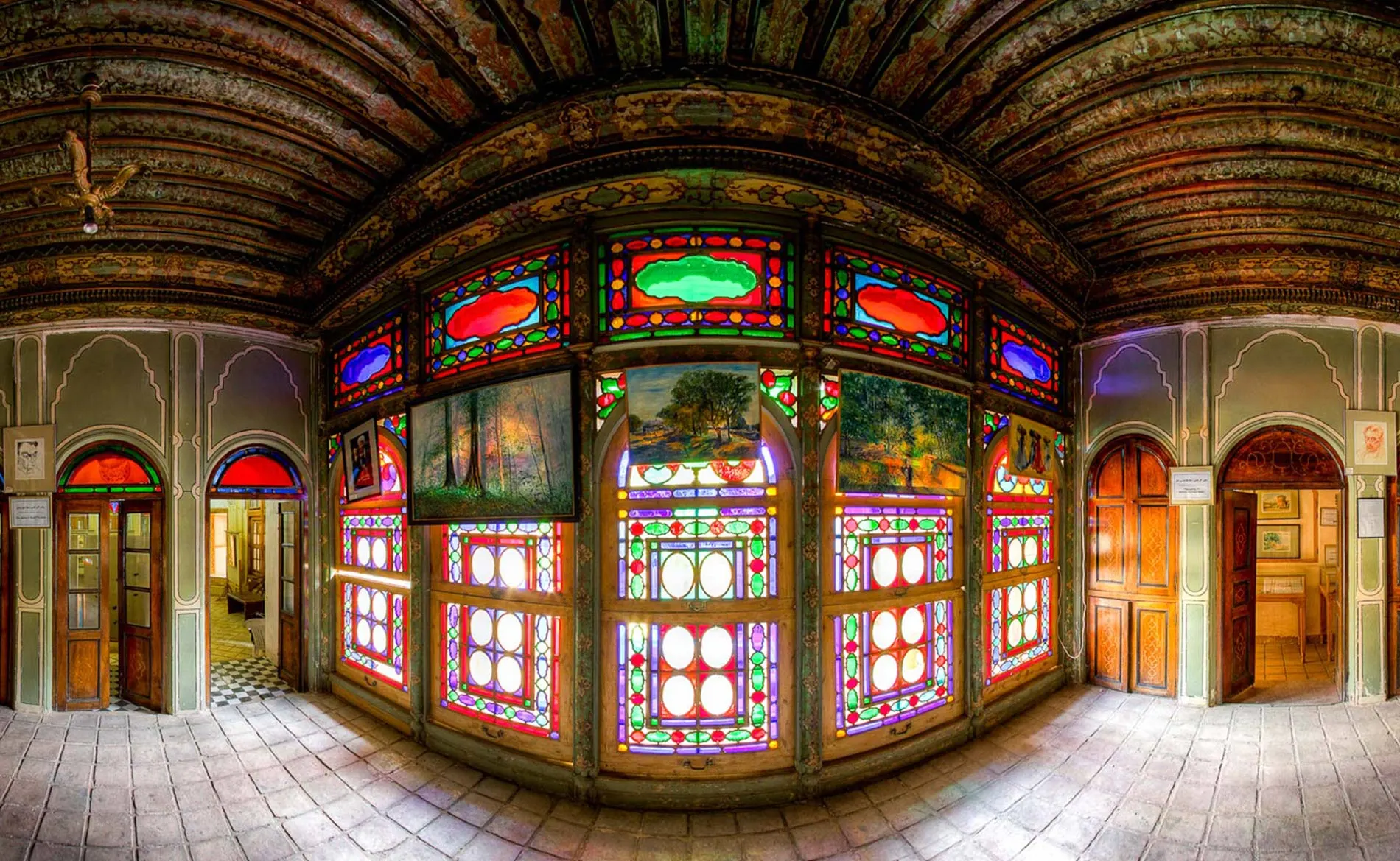
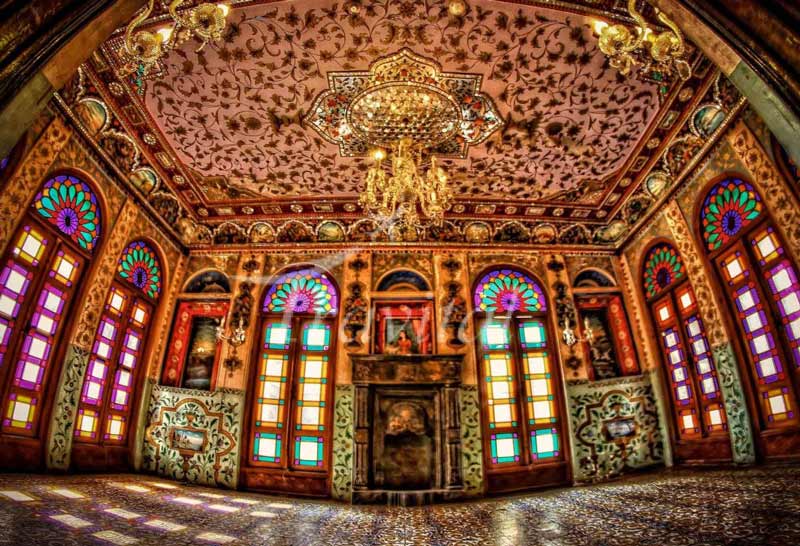
Golestan Palace is a UNESCO World Heritage gem located in the busy center of Tehran, Iran. This Qajar-era masterpiece, seen as a remarkable site in Golestan Palace reviews, fuses the elements of both Persian and European artistry. This can be seen in the stunning Golestan Palace interior.
Golestan Palace in Tehran encourages visitors to see royal halls, beautiful gardens and invaluable objects and figure out the decadent history of Iran.
To visit Golestan Palace, don’t hesitate to look into our Iran World Heritage Tour.
Golestan Palace History
Golestan Palace first came about in 1588 during the reign of Shah Tahmasp I from the Safavid dynasty, but it only became really important under the Qajar dynasty, when Agha Mohammad Khan decided to make Tehran the capital in 1796.
Nasser al-Din Shah (1848–1896), who extensively renovated it and erected the Shams-ol-Emareh in 1865, took it to its zenith. The Golestan Palace was the political center where power was shown with festivities like the monarch’s crowning and, unfortunately, also assassinations.
After the end of the Qajar dynasty in 1925, Reza Shah Pahlavi converted it into a museum, thus making it a landmark of the Qajar era’s progress and a part of Persian heritage amidst the modernization of Tehran.
Get to your hotel quickly and safely with our Iran airport transfer service.
Architecture and Design of Golestan palace
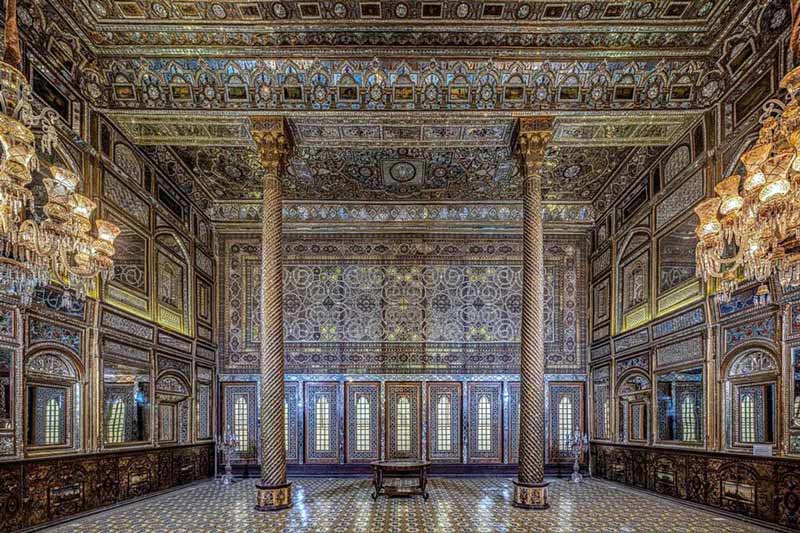
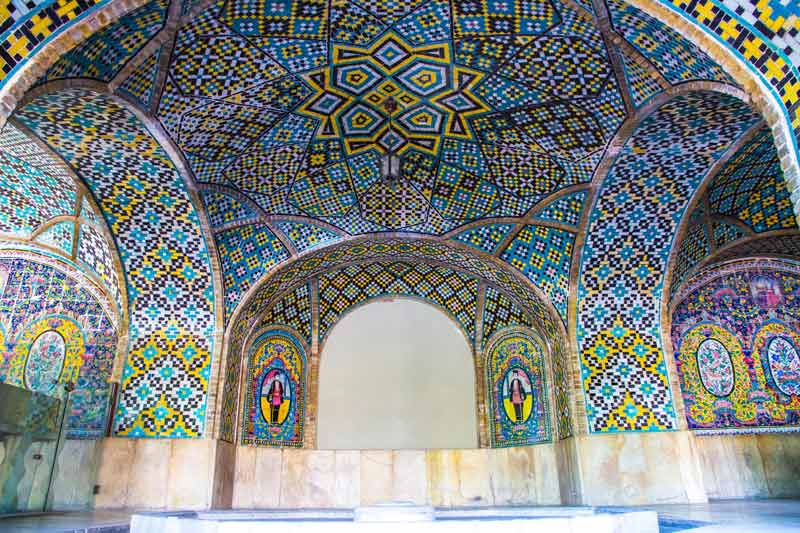
Golestan Palace has integrated Iranian culture and European styles of the 19th century into 17 structures and covers 5.3 hectares. Halls are decorated with intricate tilework, stucco carvings, and gilded mirrors, whereas the gardens have windcatchers and fountains.
Following the visions of Nasser al-Din Shah, Qajar craftsmen used neoclassical columns and rococo decorations and created an eclectic masterpiece that characterizes Golestan Palace, Tehran.
Golestan Palace Mirror Hall
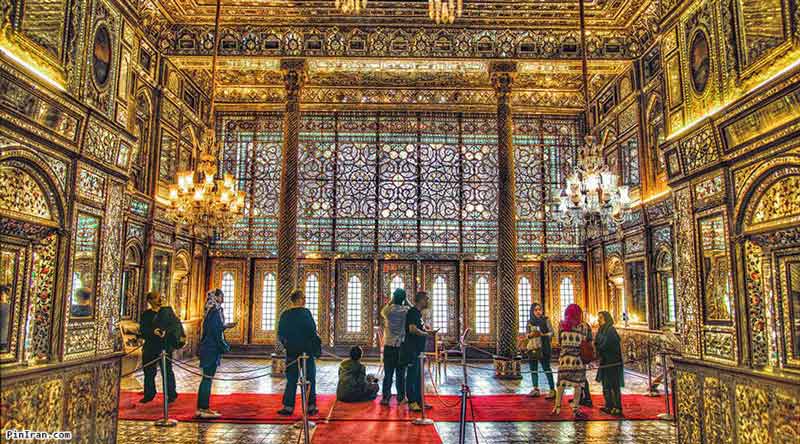
The Mirror Hall of the Golestan Palace mesmerizes with walls and ceilings covered in tiny mirrored fragments, reflecting light into infinity. Constructed in the 1860s, it hosted royal gatherings under crystal chandeliers. Floral motifs and prismatic effects make the Golestan Palace interior here a highlight for photographers.
For up-to-date information on sightseeing, transportation, and hidden gems, check out our tehran travel resources.
Throne Room of Golestan Palace
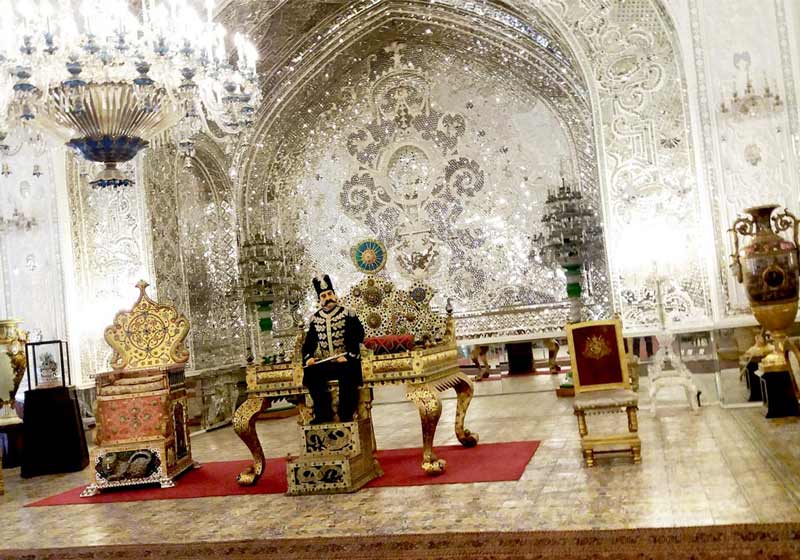
The Throne Room features the Golestan Palace marble throne, which was made in 1798 for Fath Ali Shah. This ivory decorated chair, which is held up by the figures of human beings, is placed under a peacock feather canopy. High arches and colorful frescoes give the impression of royal ceremonies being held in this great room.
Diamond Hall of Golestan Palace
With its diamond-shaped mirror facets giving the name, the Diamond Hall goes back to 1808. It was a place where private audiences were held, and so the vaulted ceilings were made to sparkle like jewels. The hall’s reflective surfaces amplify opulence, offering a serene contrast to busier areas.
Golestan Palace Museum
The Golestan Palace Museum has been arranged in the former Ivory Hall and displays Qajar treasures: Nasser al-Din Shah’s 1,800+ photographs, jeweled weapons, and European gifts such as Fabergé items. It portrays the royal life and the cultural exchanges going on.
Why is Golestan Palace in Iran recognized as a UNESCO world heritage?
Golestan Palace is a masterpiece of Persian architecture and design and for some specific reasons it is registered as a World Heritage:
- Golestan Palace complex exhibits an important interchange of human values.
- Golestan Palace complex bears a unique testimony to a cultural tradition that has spanned centuries.
- Golestan Palace complex is an outstanding example of a type of building ensemble that illustrates a significant stage in human history.
- Golestan Palace complex is an outstanding example of a traditional human settlement that represents a culture that has stood the test of time.
- The Golestan Palace complex is directly associated with events, ideas, and artistic works of outstanding universal significance that continue to inspire visitors from around the world.
Our Iran Budget Tours let you explore stunning landscapes and ancient history without breaking the bank.
Golestan Palace Tickets
The entrance fee for Golestan Palace in 2025 will be 2,500,000 IRR for general access and 15,500,000 IRR for full access. Foreign visitors have to pay extra while students enjoy discounts. Tickets can be purchased either at the venue or online. Daily open from 9:00 a.m. to 7:00 p.m. (last entry at 5:15 p.m.). Modest dressing is required and flash photography is prohibited. Located near the Grand Bazaar, it is very accessible by the metro.
Where is the Golestan Palace located?
The Golestan Palace complex is situated in the heart of Tehran’s old town, near the Grand Bazaar and other historical landmarks. The address of Golestan Palace is as follows: Panzdah-e-Khordad St, Tehran, Iran. The palace complex is easily accessible by public transportation, including metro and bus, and is a popular destination for both domestic and international visitors to Iran.
Our Iran Tour Packages are designed to give travelers an unforgettable journey through Iran’s rich history, vibrant cities, and breathtaking landscapes — all with local expertise and personalized service.
FAQ
Where is the Golestan Palace?
The Golestan Palace, Iran, is located on Panzdah-e-Khordad Street, just a few steps from the Grand Bazaar. The metro Line 1 has a stop at Panzdah Khordad Station. You can find a lot of taxis in this downtown area.
How big is Golestan Palace?
The complex site is 5.3 hectares. It features gardens, 17 buildings, and paths. a visit can be done in 2 to 3 hours. Being small yet so rich in cultural heritage, Golestan Palace has been praised by many as having a perfectly balanced scale and intimate courtyards.
How old is Golestan Palace?
It is more than 435 years old, dating back to 1588 when the palace was built during the Safavid dynasty. The changes and additions made during the Qajar era in the 19th century are the most prominent ones.
Who built the Golestan Palace?
Shah Tahmasp I was the one who initiated the building in 1588. In the 19th century, the significant expansion and construction of the landmark structures in the Golestan Palace were done by Qajar kings with the leadership of Agha Mohammad Khan and Nasser al-Din Shah.
Who lived in Golestan Palace?
The palace was the home of the Qajar shahs from 1796 to 1925, among which we can mention the court and harem of Nasser al-Din Shah. It buzzed with diplomats, family members and ceremonies until becoming a museum.
When was the Golestan Palace built?
The construction started in 1588 under Shah Tahmasp I. The major Qajar modifications were made in the 1800s, for instance, the 1860s Mirror Hall under Nasser al-Din Shah, which spans over 300 years.
What to visit in Iran after Golestan Palace?
We have included Golestan Palace in almost all Iran cultural tours & Iran Budget Tours, and especially on Iran World Heritage Tour. These packages offer a unique opportunity to explore the rich cultural and historical heritage of the region. Whether you are interested in exploring the region’s World Heritage sites, our tour packages offer a comprehensive and immersive experience of Iran’s diverse cultural and religious traditions at reasonable rates.
If you’re interested in exploring more of Iran’s cultural and historical treasures, there are many other destinations worth visiting. Here are a few suggestions:
Tehran: The capital city of Iran is a vibrant metropolis with many cultural and historical attractions, including the National Museum of Iran, and the Shahyad Tower.
Kashan: This historic city is home to some of Iran’s most beautiful traditional houses, as well as the stunning Fin Garden and the Agha Bozorg Mosque.
Yazd: This desert city is famous for its unique architecture and historical sites, including the Jameh Mosque and the Zoroastrian Fire Temple.
Persepolis: Located in the southwestern province of Fars, Persepolis is an ancient city that was once the capital of the Achaemenid Empire. The city is home to stunning ruins, including the Gate of All Nations, the Apadana Palace, and the Hall of 100 Columns.
Isfahan: Known as the “half of the world,” Isfahan is a beautiful city with a rich history and stunning architecture. Highlights include the Naqsh-e Jahan Square, the Chehel Sotoun Palace, and the Shah Mosque.
Shiraz: Located in the southern province of Fars, Shiraz is known for its beautiful gardens, historic mosques, and vibrant bazaars. Highlights include the gardens of Eram and Narenjestan, the Vakil Mosque, and the Nasir al-Mulk Mosque.
Ahvaz: Located in the southwestern province of Khuzestan, Ahvaz is a city known for its rich history and culture. Highlights include the Shush, Shushtar Historical Hydraulic System, and the ancient Elamite complex of Chogha Zanbil.
Let us know your experiences of visiting or your questions about the Golestan Palace in the comment box below, we will be happy to hear from you!