In the core centre of Shiraz, one of the most culturally rich cities of Iran, there is Vakil Bazaar— a traditional bazaar, which can give the tourist a stunning mixture of history, culture, and craft. Whereas the modern shopping centers are nothing compared to the riches and treasures of this bazaar, as it is a lively reminder of the Persian commerce that was centuries old, and in every corner of a shop, one can hear the tales of the past and see the best that can be offered in Iranian skills.
Are you in need of some genuine Persian carpets, some exotic spices, beautiful handicrafts, or are you just curious to know what the local Shirazi people do in their daily life, The Vakil Bazaar Shiraz is going to be an exciting adventure. The article gives you some insight into the rich history of the bazaar and its breathtaking architecture, as well as its wide variety of offers and cultural sites nearby that will make your trip to the place quite educative and stimulating to go along with.
Start your journey with insights from our comprehensive Shiraz Travel Guide.
The Historical Background of Vakil Bazaar
Vakil Bazaar has its foundation in the mid-18th century when Karim Khan Zand was the founder of the Zand Dynasty, and he converted Shiraz into his capital city. As a strong ruler, Karim Khan was also regarded as a visionary urban planner and art patron. He expanded the city himself to make it a wealthy metropolis, where he ordered numerous large architectural buildings, with Vakil Bazaar dedicated as the commercial center of Shiraz city.
Vakil Bazaar was built in the period of 1766 to 1778, and it was meant to host all the traders and merchants in Persia and outside Persia. The bazaar was constructed to serve two aspects: conducting business and acting not only as a social meeting point of the locals but also as of visitors. It is strategically placed close to the Vakil Mosque and Vakil Bath, creating a bigger unit which symbolizes the picture of religious, commerce, and social life of Shiraz throughout the Zand period.
Bazaar has gone through many political and modernization upheavals and still has most of its classic outlay and beauty. The continuity provides the visitors with such an opportunity to see a piece of Iranian history that has remained unchanged in history during more than two centuries.
Architectural Beauty of the Bazaar
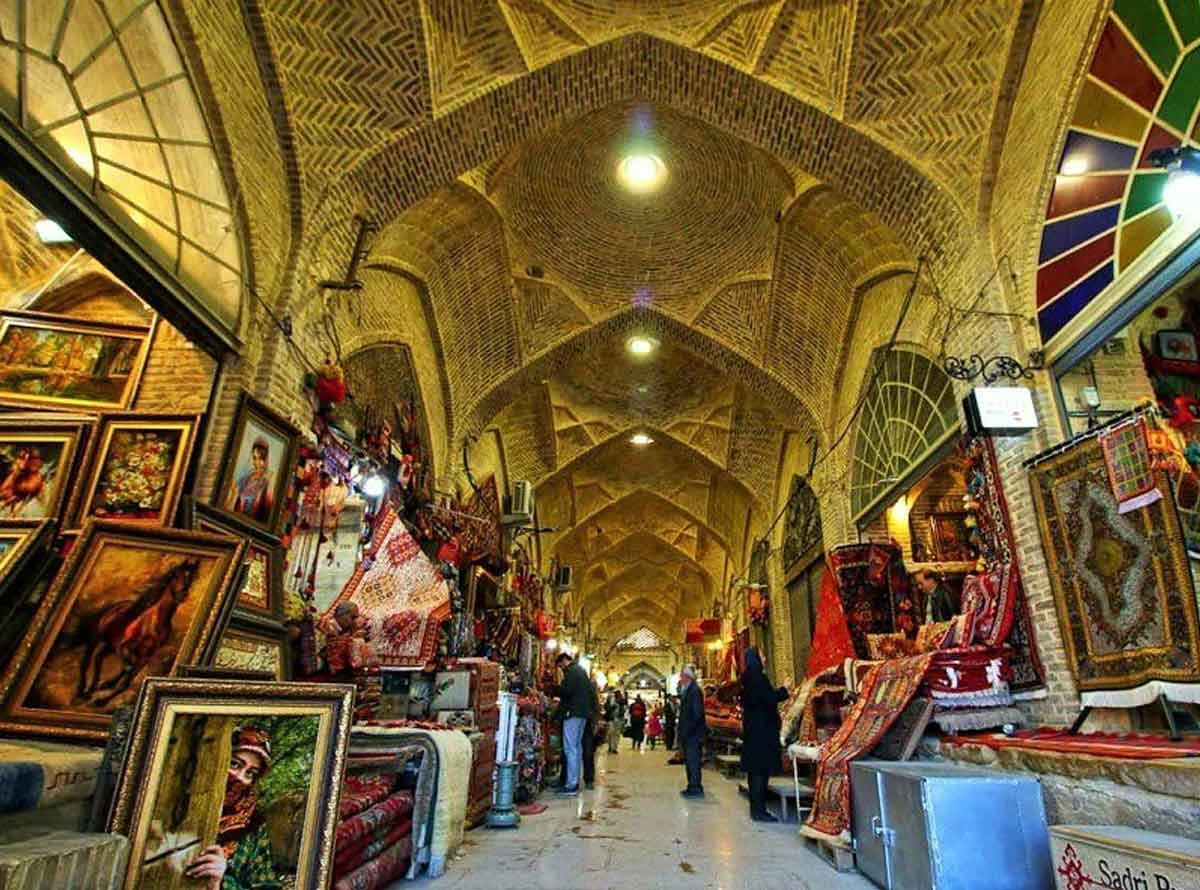
Vakil Bazaar is a living museum of Persian architecture. One walks into the market, which was an example of the creativity and beauty of the old Iranian architecture. Most impressive is the row of vaulted ceilings, some as high as 12 meters, giving the bazaar a rather imposing yet cosy interior. Such domes and arches are constructed of brick and carefully placed in geometrical patterns that give them strength and beauty of artistic design. Thick walls and covered passageways assist in keeping the temperature at a comfortable level, thus shielding shoppers and businessmen against the harsh rays of the Shiraz sun in summer and keeping them warm in the colder season.
The structure of the bazaar is made in the form of long and narrow corridors with small shops made of stone. The opening of arches, doors, and windows joins and repeats in a rhythmic way that makes the space calm and also imposing. Skylights constructed into the ceilings provide natural light that penetrates the deep colors of the goods and puts emphasis on decorative work of plaster and brick designs. Minor details such as carved wooden doors, stained glass windows, and decorative tile work provide artistic flavor. Apart from most of the bazaars which are heavily modernised, Vakil Bazaar does not lose its historical essence, so one can travel back to the past by observing architectural features here.
If this sounds like your kind of destination, make sure your Iran visa application is ready before planning your trip.
Saraye Moshir: A Colorful Corner Inside the Bazaar
The beautiful Saraye Moshir is a smaller covered courtyard inside a larger compound of Vakil Bazaar, once a caravanserai. Presently, the Saraye Moshir is a cultural territory of the artisans and artists, characterized by a quiet atmosphere and colourful culture.
In this place, tourists will get to see shops that are full of beautiful Persian handicrafts, such as miniature paintings, and the Khatamkari marquetry that produces beautiful geometrical works. Stalls with hand-woven textiles, traditional jewelry, and artfully made souvenirs can also be found in the courtyard.
The best place to go for those who are willing to pay attention to the details of the Persian art and crafts is Saraye Moshir. Compared to the busier main bazaar, it has a calmer atmosphere, which allows calm reflection and admiration of the cultural heritage of Shiraz. Make your arrival stress-free by booking a trusted Iran airport transfer in advance.

What You Can Buy in Vakil Bazaar
As far as shopping is concerned, Vakil Bazaar offers a vision of an earthly paradise of traditional Iranian articles. The diversity and the level of product are key to the reputation of Shiraz as the historic centre of culture and trade.
Popular Items Include:
- Persian Carpets and Rugs: Created by hand with either wool or silk, these carpets are infamous due to their pattern-rich nature and vibrant colors. The shop offers an astounding variety of styles in many regions of Iran, whether you are a great collector or a casual customer.
- Handicrafts: There is a lot of exquisite copperware and brassware, including beautiful trays, excellent pottery, and glassware.
- Fabrics and Textiles: Beautifully dyed silks, velvets, and cotton fabrics in the traditional Persian patterns are available all over the market.
- Jewelry: There is a wide range of jewelers in the bazaar selling gold, silver, and precious stones set in traditional patterns.
- Antiques and Collectibles: Going hand in hand with old things are new things, especially for the knowledgeable antique and collectible.
The Spice Shops Not to Be Missed
One of the most appealing areas of the bazaar is the spice shops and they are colorful and smell of scents. The stroll through these stalls will be a feast to the senses as the smell of saffron, sumac, cinnamon, and dried rose petals, among other spices, will fill the air.
These stores also sell herbal cures, dried fruits and nuts, and aromatic tea. It is also an educational, as well as an enjoyable, pit-stop in the bazaar because the vendors are normally glad to report about the uses and origins of their products.
Vakil Mosque and Vakil Bath: Cultural Gems Nearby
Just a few steps from Vakil Bazaar, two architectural and cultural masterpieces await: Vakil Mosque and Vakil Bath. Both of these historical landmarks were commissioned by Karim Khan Zand during the 18th century, aiming at achieving his great vision, where Shiraz would become a very strong cultural and political capital. They echo the same aesthetic and structural values observed in the bazaar, which makes the interaction of the visitors with this historic district uniform.
Vakil Mosque, with its magnificent tile-work, its majestic iwans and spiral stone columns, is a quiet corner exhibiting the artwork of the Zand architecture. Its enormous courtyard and prayer halls welcome the worshippers and the tourists to admire the detailed designs that have survived through time.
also read: Vakil Mosque
Vakil Bath used to be a luxurious natural bath among the people, where people not only came to clean up but also to socialise and relax. Today, it is a replica of what it used to be, and it has been reopened to serve as a museum where one can get to look at how these Persian bath houses were run.
- Hint: Visiting the bazaar, follow it with a tour of the mosque and the bath to feel more culturally involved.
- Photography Tip: The time of day or night has been seen to best photograph the tile work and architectural details in the early morning.
also read: Vakil Bath: Ancient Bathhouse in Shiraz, Iran
Practical Tips for Visiting Vakil Bazaar
Things you should think about so that your visit to Vakil Bazaar can be a pleasant one:
- Best Time to Visit: Early in the morning or in the late afternoon to avoid the rush and heat (the afternoon is particularly nauseating during the summer).
- Dress code: Modest clothing is appreciated. One should wear comfortable footwear since the bazaar has long corridors and its floor is made of stone.
- Bargaining: Bargains are usual and anticipated in the Iranian bazaars. Be polite and smile, ushering in the best prices.
- Language: English may not be a universal language, but some of the Farsi phrases or a translation app will facilitate.
- Safety: The bazaar is safe and tourist-friendly, but watch out for your belongings as with any other crowded market.
- Payment: King is cash. Credit cards are not accepted in Iranian shops; bring adequate Iranian rials.
Discover Iran with our Iran Budget Tours – authentic experiences at affordable prices.

Why You Should Visit Vakil Bazaar
Vakil Bazaar is a place worth visiting besides making purchases. It makes you live in a breathing history that portrays a dynamic history, artwork, and communal life. The scene is very much like that in the market; it is busy but relaxed. A true Shiraz is a city with poetry, gardens, and a warm atmosphere.
Be it admiring architecture or interacting with local craftsmen or even just enjoying the smell of fresh spices, this place is a memorable experience. It links you to centuries of tradition and appeals to your senses at the moment (reducing the need to define and describe the relationship between tradition and present).
Final Thoughts
Vakil Bazaar is not a market only; it is a cultural site that is nice to investigate, to explore, and to connect. This historical bazaar has been the main condition of Shiraz’s identity, reflecting the art, architecture, and social life of the Persian civilization.
Any person going to Shiraz must visit Vakil Bazaar, a journey into the past, a journey into an ancient world where each stone and spice has its own story to tell.