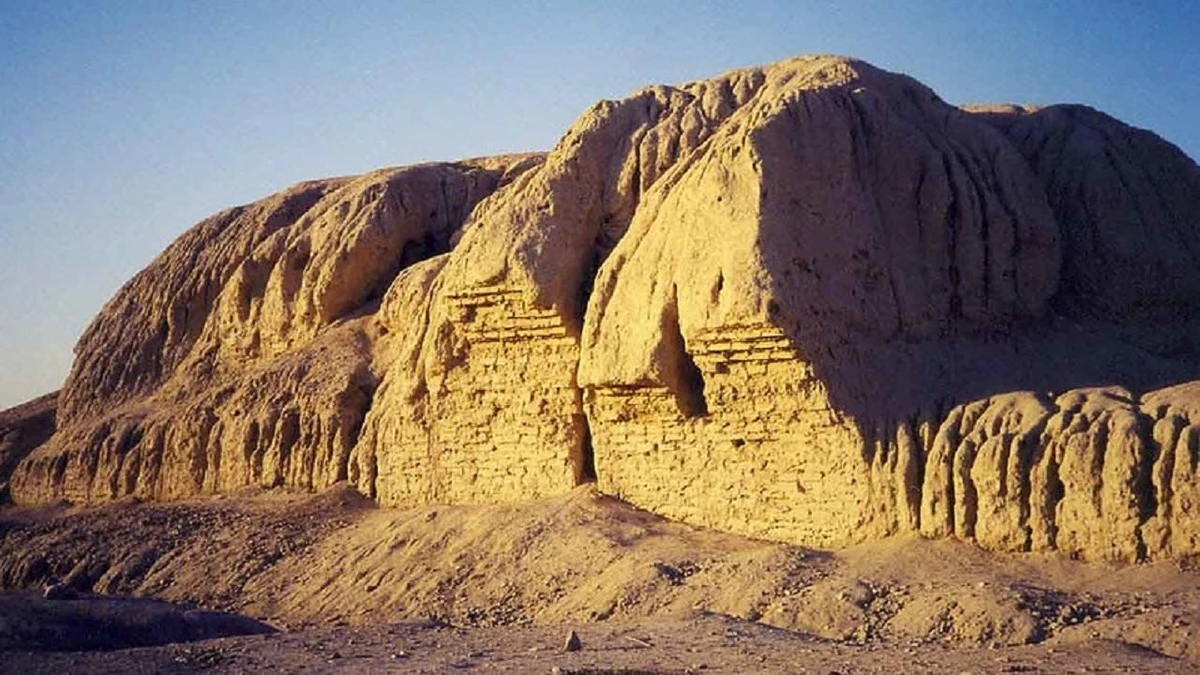
Sialk Hill is an archaeological site located in Kashan, Iran. It is a valuable source of information about the ancient civilization of Iran, dating back 5000 years. The site is particularly interesting for enthusiasts of ancient civilizations as it provides a fascinating glimpse into the lives of our ancestors.
Sialk Archeological Hills History
The Sialk hills have experienced various distinct periods that reveal the early societies in Iran’s development. The excavated site has been classified archaeologically into periods called Sialk I to Sialk IV, with each one marking a substantial cultural and technological progress.
Tepe Sialk, a community of primitive agriculture, around 6000 BCE, had two main hills. The results seen during the Sialk III-IV period (circa 4000-3000 BCE) show innovations in ceramics, metalwork, and water supply as the basis of urban growth.
The most important aspect was the Sialk ziggurat, built on the southern hill, which became notable in the late 4th millennium BCE and symbolized the change from agricultural settlements to cities and impacted urban development in Iran.
The site has yielded, among others, painted ceramics and copper tools, showing the existence of trade routes and artistic skill. This has shown the connection of Tepe Sialk to wider Mesopotamian influences while revealing local creativity.
Tepe Sialk Age
The Tepe Sialk mounds are considered the oldest by more than 7,000 years and the most ancient layers have been approximated to about 6000 BCE through carbon dating and stratigraphic analysis. The excavations of Roman Ghirshman, a French archaeologist, in 1933-1937 and later Iranian teams did unearth six levels of occupation.
The findings contain Sialk I Neolithic tools that point to a shift from hunting-gathering to farming, and Sialk IV proto-Elamite tablets that show early writing systems around 3000 BCE.
Archaeological finds
Excavations at Sialk Hill have uncovered a wide range of ancient structures, including houses, temples, and fortifications, made of mud brick and stone. These structures show evidence of advanced engineering and architectural techniques.
In addition to the structures, excavations have also revealed a wide range of artifacts, including pottery, metalwork, and jewelry. The intricate designs and patterns found on the pottery and metalwork are a testament to the artistic skills of the ancient Iranians and their dedication to preserving their cultural heritage.
One of the most significant finds at Sialk Hill is a series of painted pottery vessels that date back to the 4th millennium BCE. The vessels are decorated with elaborate geometric designs and images of animals, providing valuable insight into the artistic traditions of the ancient Iranians.
The site also contains thousands of years old pottery shards on the ground and around the hills, as well as looms and weaving tools, which are evidence of the people’s familiarity with the textile industry. The inhabitants of the area used to make their own tools and equipment by melting metals, and the discovery of the metal melting furnace in the southern part of this hill can classify the city of Sialk as one of the most industrialized cities of that era.
If this destination is now on your bucket list, don’t forget to check out the Iran visa application process.
Sialk Archeological Hills Location
The Sialk archeological hills, located in the Fin district southwest of Kashan, Isfahan Province, are very easy and comfortable to reach for visitors. The site is only 4 kilometers from the city center of Kashan and can be easily accessed by taxi, bus or a short drive along Amir Kabir Street.
The proximity to attractions like the Fin Garden (a UNESCO site) and the historic Kashan Bazaar makes day trips even more appealing. The Sialk ziggurat of Kashan, which is situated on the top of a hill overlooking the desert, provides visitors with remarkable scenery and a peaceful retreat to the past.
Cultural significance
Sialk Hill is a symbol of Iran’s rich cultural heritage and an important source of information about the ancient civilization of Iran. The site provides a fascinating glimpse into the customs, beliefs, and way of life of our ancestors, and the artifacts and structures found at the site provide valuable insights into the artistic and cultural traditions of the ancient Iranians.
Preservation efforts
Preserving Sialk Hill and its archaeological treasures is of paramount importance. The Iranian government has designated the site as a national monument, and measures have been implemented to protect the site from damage and degradation. The site is also being studied by archaeologists and historians, who are working to understand the site and its significance.
–>Immerse yourself in the beauty and history of Iran with our Iran Budget Tours, crafted for memorable and affordable adventures.
Tourism
Sialk Hill is a popular tourist destination for visitors to Kashan. The site is open for public tours, allowing visitors to explore the ancient mounds and learn about the history and cultural significance of the site. In addition to the archaeological finds, the site also features a museum that houses findings from different periods of Sialk and a display hall for introducing documentary films.
Travel like a pro by reserving your Iran airport transfer ahead of time.
Take part in our guided tours to Sialk Hill, providing you a nice visit with a deeper understanding of this hill’s history and architecture.
Last word
Sialk Hill is a valuable source of information about the ancient civilization of Iran and a testament to Iran’s rich cultural heritage. The site provides a fascinating glimpse into the lives of our ancestors and their customs, beliefs, and way of life. It is a must-see for anyone interested in history and archaeology, and a valuable part of Iran’s cultural heritage.
Let us know your ideas and comments about this hill in the comment box below, we will be happy to hear from you!