Celebrations in Iran are a colorful and lively image of the country’s diverse culture, embracing the age-old Persian customs, Islamic religious festivities, and national ceremonies. The ancient Nowruz rituals, the solemn Shia mourning ceremonies and the cheerful patriotism of the present together form the Iranian celebrations. They are always very open and welcoming to foreigners who yearn for a deeper understanding of the country.
If you are curious about the New Year celebrations, Ramadan observance, or the remembrances of important events in Iran history, this guide gives tourists all the necessary information. Continue reading to learn about the most stunning celebrations and traditions in Iran and how to experience them respectfully.
Overview of Celebrations and Traditions in Iran
The wide variety of celebrations and traditions in Iran results from the country’s long history and its diverse ethnic composition. Iranian celebrations can be divided into three major categories: the ancient Zoroastrian-rooted festivals that are still celebrated today and predate Islam, Islamic religious occasions performed by the Shia majority, and national or revolutionary holidays that highlight modern political events.
Each of these occasions has a positive impact on family relationships, cultural identity, and provides moments of happiness or contemplation during the year. The religious celebrations follow the Islamic lunar calendar, while the national holidays follow the Solar Hijri calendar; on the other hand, the traditional Persian festivals still mark the time of the seasons and solar cycle.
Major Traditional Celebrations in Iran
Here are the major celebrations in Iran that have been celebrated for thousands of years:
Nowruz – Persian New Year
Nowruz, a term which translates to “new day,” is the very first and the most important festival among the celebrations in Iran and it also announces the end of winter and the Persian New Year (usually March 20-21). Nowruz has been recognized by UNESCO as an Intangible Cultural Heritage and is celebrated for 13 days during which people practice house cleaning (khane tekani) rituals, set up the Haft-Sin table with seven symbolic items starting with the letter “S,” visit friends and family, and gift exchange.
The highlight is the exact moment of the vernal equinox when families gather around the table to welcome the new year. Public holidays, picnics and traditional music are among the ways people celebrate and bring joy to the country.
Yalda Night – Celebration of Light and Winter
Yalda Night, an ancient celebration of honoring light over darkness, falls on the longest night of the year (December 20-21). Families stay awake throughout the whole night, eating pomegranates and watermelons, reading Hafez’s poems, and sharing stories. The red fruits stand for the red colors of the dawn, while nuts and dried fruits stand for prosperity.
Chaharshanbe Suri – Fire Jumping Festival
The eve of the last Wednesday before Nowruz (about mid-March) marks Chaharshanbe Suri, during which Iranians make little bonfires in public places and jump over them, at the same time saying: “Give me your red color, take back my sickly pallor”. This purifying ceremony, mixed up with fireworks and banging spoons, gets the people ready spiritually for the new year.
Sizdah Bedar – Nature Day
On the 13th day of Nowruz (April 1 or 2) is Sizdah Bedar, and it is the day when millions of people go outdoors for picnics. Friends and families throw sabzeh (the sprouts of the greens from the Haft-Sin table) into flowing water to get rid of their bad luck and spend the whole day in parks and the forest playing games, having BBQ or traditional food and dancing to music.
Religious Celebrations in Iran
Let’s see the religious festivals and celebrations in Iran that date back to the time when Islam came to the country:
Ramadan in Iran
Iran celebrates Ramadan with utmost faith. The sacred month brings the majority of the Iranians to fast from early morning until night. The daytime is quieter with fewer people, but at the end of each day’s fast (iftar, sunset), the cities are full again, which is due to families getting together, special night prayers (Tarawih & Qadr nights) being held, etc.
Eid al-Fitr
Eid al-Fitr, which is the festival marking the end of Ramadan, is a very happy three-day holiday with morning prayers, new clothes, giving charity (Zakat al-Fitr), and visiting relatives as the main activities. The houses are filled with sweet pastries and traditional dishes.
Eid al-Adha
The Feast of Sacrifice symbolizes the absolute loyalty of Prophet Abraham to God and refers to the incident when he was about to sacrifice his own son, Isaac (Ishmael in Islam). In Iran, families who can afford it slaughter sheep or goats and the meat is then equally shared with the poor, neighbors, and relatives.
Ashura & Tasua (Shia Ceremonies)
The 9th and 10th of Muharram are the most important days in the Shia calendar as they not only remember the martyrdom of Imam Hussein in Karbala (680 CE) but also are days of mourning.
One can witness grand processions, chest-beating (sineh-zani), passion plays (ta’zieh), and free food distribution (nazri) that all together create an atmosphere of mourning and solidarity in the entire country.
Celebrations Related to Important Events in Iran History
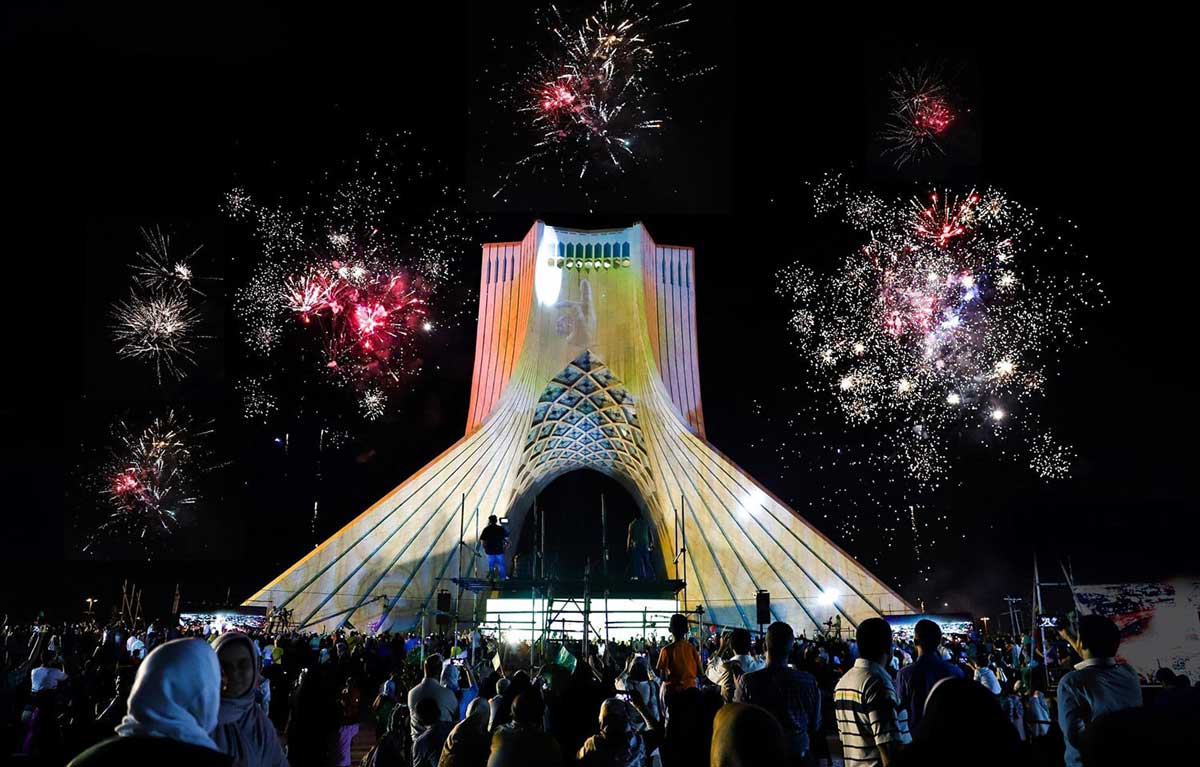
February 11 is the day when the victory of the Islamic Revolution in 1979 is commemorated, and it is a day marked with rallies and fireworks. There are also National Army Day (April 18), Islamic Republic Day (April 1), and National Day of the Persian Gulf (April 30), which are other patriotic events.
Iran pays homage to its great writers as well: Hafez Day (October 12) in Shiraz and Saadi Day (April 21) with poetry readings and gatherings at their tombs.
Does Iran Celebrate Halloween?
Officially, no. Halloween is not considered among the celebrations in Iran, and at times it is even criticized as a sign of Western cultural influence. But, over the last few years, the youth in large urban areas, especially in Tehran, have been organizing informal costume parties in private houses or cafes, but these events mainly remain low-profile.
Do Iranians Celebrate Christmas?
Christmas is also not among the celebrations in Iran among Muslims, but the recognized Christian minorities of Iran (primarily the Armenians and the Assyrians) are free to celebrate December 25 openly. Midnight masses are held in churches located in Tehran, Isfahan, and the Jolfa district, and Christian neighborhoods are decorated with Christmas trees. These festivities are generally respected by Muslims.
Does Iran Celebrate Thanksgiving?
No, Thanksgiving is not a celebration in Iran. The locals are not aware of it at all, but some Iranian-American families or expatriates may have private dinners.
Regional & Local Celebrations in Iran
Iran’s large number of different ethnicities has resulted in its local festivals being very colorful. The spring festival of Pir Shalyar, which lasts for three days, is celebrated by the Kurds with lots of music and dancing. The regions of Bushehr and Hormozgan are famous for their Zar and Bandari music rituals, respectively.
The Azerbaijanis are noted for their rich wedding ceremonies consisting of many customs and practices; whereas the Arabs in the Khuzestan community beat their drums in peculiar ways during Muharram to signal mourning and the like.
Tourist Tips for Experiencing Celebrations in Iran
Nowruz (late March–early April) is the best time to witness the fantastic celebrations in Iran as the whole country celebrates. Yalda (December) and Muharram are profound experiences too. Always wear modest clothes, especially during religious events and ask permission before taking pictures at mourning ceremonies.
Irun2Iran provides specialized tours for Nowruz, Yalda experience packages, and cultural immersion programs that include home visits and participation in local festivals with English-speaking guides and local guides.
Conclusion: Why Iranian Celebrations Are a Unique Cultural Experience
The celebrations in Iran are more than dates on a calendar. They are moments of great human values of resilience, poetry, family and faith. Celebrating Nowruz with an Iranian family or sharing a watermelon under the stars on the Yalda Night are memories that do not just belong to ordinary tourism; they surpass it.
These magical moments make travelers realize that the greatest treasure of Iran is its people and their age-old traditions. So, book your trip for one of these festivals, and experience for yourself the reason that millions are returning home deeply affected by Iranian warm hospitality.