Architecture of Saint Sarkis Cathedral, Tehran
Eugene Aftandilian, a famous architect, designed Saint Sarkis Cathedral. Aftandilian’s design is not only beautiful but also daring. The cathedral is a superb example of 20th-century Armenian sacred architecture, and it modernized the ancient tradition.
For up-to-date information on sightseeing, transportation, and hidden gems, check out our tehran travel resources.
Exterior and Dome
A large part of Saint Sarkis Church in Tehran is made of the brilliant white travertine marble that gives it a celestial look. The most eye-catching part of the structure is the great dome, appearing as if it is floating and creating a very special atmosphere in the liturgical area. This illusion is made possible by the transfer of the weight of the dome through eight concealed horizontal steel-reinforced beams that lead it directly to the thick outer walls, thereby eliminating the need for interior columns and opening up a very spacious prayer hall.
The western façade of St. Sarkis Armenian Church in Tehran is flanked by two thin bell towers with smaller octagonal domes on top of them. A very expressive and large khachkar-style marble memorial is the first thing that one sees on passing by the west side of the St. Sarkis Church in Tehran. This memorial is a remembrance of the Armenian Genocide of 1915. The memorial was unveiled in 1973 and it has inscriptions in Armenian and Persian.
If you are inspired by the rich Christian heritage of Saint Sarkis Cathedral in Tehran, join our Iran Christian Tour and discover Iran’s most important biblical and historical sites through a carefully designed 12-day journey.
Interior and Artistic Features
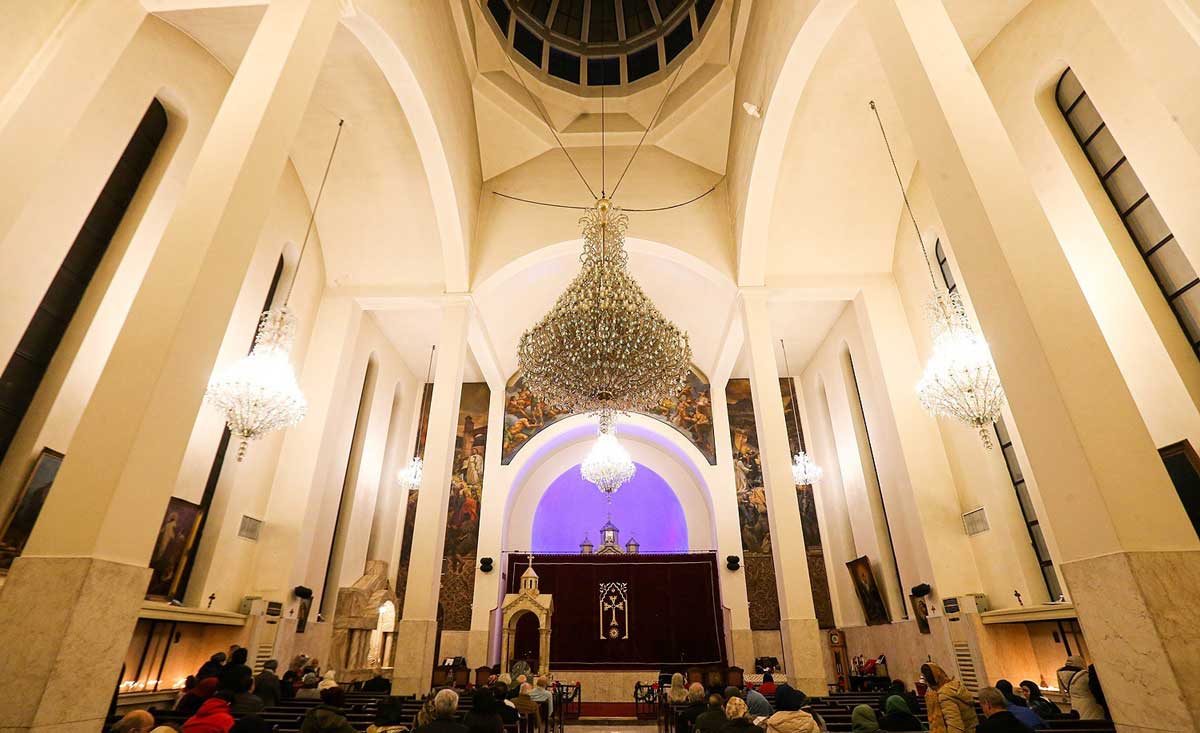
The interior is laid out in a traditional Armenian cross-in-square fashion, giving an impression of being very airy and light. The light from the sun streams in through the tall arched windows, which have been intricately laced with stone and illuminate the whole nave. The apse has a semi-circle shape and is filled with the brilliant frescoes done in 1970-71 by the well-known artist Edman Ayvazian, which show the life of Christ, the martyrdom of Saint Sarkis, and the important events of Armenian sacred history.
The peace-bringing and majestic atmosphere is enhanced by the beautifully carved wooden iconostases, the customary bronze chandeliers, and the choir balcony, which has been erected above the entrance and is open to the congregation.
Regardless of your reason for visiting, be it prayer, history, or simply admiration of the architecture, Saint Sarkis Cathedral, Tehran, promises an incredible experience of faith, endurance, and beauty.
Take part in our guided tours to Saint Sarkis Church, providing you a nice visit with a deeper understanding of this church’s history and architecture.
Our Iran Budget Tours let you explore stunning landscapes and ancient history without breaking the bank.
Celebrating Armenian Heritage: The Role of Saint Sarkis Church
Saint Sarkis Church is an important religious center for the Armenian community in Tehran and throughout Iran. The church is dedicated to Saint Sarkis the Warrior, who is believed to have lived in the 4th century AD and is revered as a saint by both Armenians and Syrians. Saint Sarkis is known for his bravery and strength and is believed to have protected the Armenian people from their enemies.
In addition to its religious significance, Saint Sarkis Church also serves as a cultural and social center for the Armenian community in Iran. The church hosts a variety of events and activities throughout the year, including concerts, lectures, and cultural festivals.
Our Iran Tour Packages are designed to give travelers an unforgettable journey through Iran’s rich history, vibrant cities, and breathtaking landscapes — all with local expertise and personalized service.
Saint Sarkis Holy Church; The Memorial of the Armenian Genocide
The Memorial of the Armenian Genocide in the Saint Sarkis Holy Church is made of white marble and stands at a height of 3.50 meters on a base of the same stone. There is a plaque on the base with inscriptions in Persian Nastaliq script above and Armenian script below, which reads “In memory of the martyrs of Armenians” and “24 April 1915” respectively. The memorial was unveiled on April 23, 1973, on the 58th anniversary of the Armenian Genocide.
The memorial is designed with three stone pieces and the cross symbol on the columns represents the resurrection of Christ and is a sign of martyrdom and uprising. It signifies that despite the massacres, displacement, and dispersion, the Armenian people were able to establish an independent Armenian government in 1918 after enduring centuries of foreign domination. Other symbols on the facade of the memorial represent the spirit of freedom, stability, adherence to religion and faith, and the belief in the triumph of truth and justice. Visiting landmarks like Saint Sarkis Church can be a highlight of your journey, and joining our Iran Cultural Tour in 12 Days will allow you to explore Iran’s rich heritage with expert guidance and a well-planned itinerary.
Last word
Saint Sarkis Church is a unique and important landmark in Iran and a testament to the rich cultural heritage of the Armenian community. Its blend of traditional Armenian and modern architectural styles, combined with its religious and cultural significance, make it a truly remarkable site. Despite the challenges it has faced over the years, the church stands as a symbol of the resilience and perseverance of the Armenian people. It is a testament to the importance of preserving cultural heritage, and a reminder of the important role that cultural landmarks play in shaping our understanding of history and identity. Planning a trip? Don’t forget to check the Iran visa application process.
Let us know your ideas and comments about this church in the comment box below, we will be happy to hear from you!