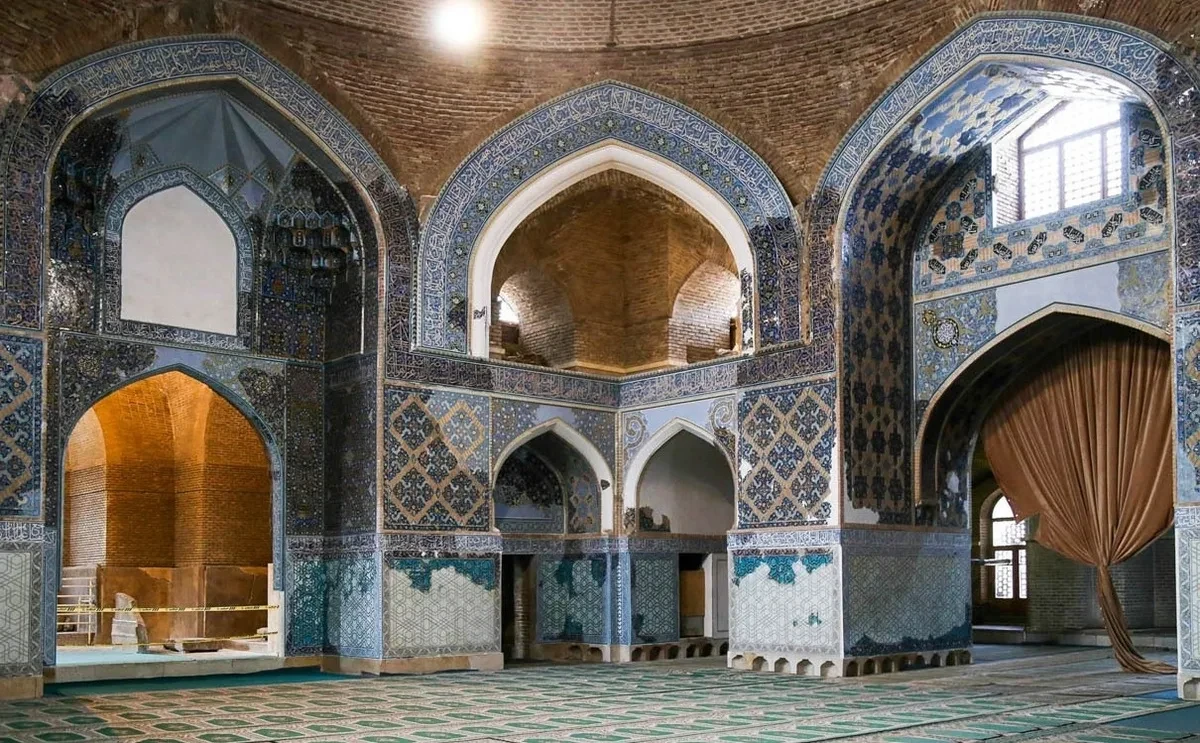
The Blue Mosque, Tabriz or Masjed-e Kabud or Jahan Shah Mosque is of particular interest to Iranian architecture and as a historical monument in Iran. The mosque, which is known as the Turquoise of Islam, displays beautiful blue tiles that show detailed designs using turquoise, azure and cobalt hues.
The artistic and engineering masterpiece of Islamic design is well depicted in the central area of Tabriz which is the location of the mosque. We are going to study the history of the site and the building and provide a guest with a detailed map on how to enjoy this great tourist cultural site.
From ancient ruins to vibrant bazaars, Iran Tour Packages take tourists on an unforgettable journey through the heart of Persian history and hospitality.
History — From Qarā Qoyunlu to Present
The Blue Mosque, Tabriz, Iran, traces its origins to the Qarā Qoyunlu dynasty. Sultan Jahan Shah ordered the construction to begin in 1465 when he ruled the Qarā Qoyunlu (Black Sheep Turkmen) dynasty and commissioned the mosque as part of a larger construction project. Some sources attribute project management to his wife, daughter and a female benefactor named Chatun Jan Begum and Saliha Khanum. The project reached its final stage between 1480 and 1489 during the following Āq Qoyunlu era.
The original complex included the mosque itself, a library, a school (madrasa), a mausoleum, a cistern and a khanqah (Sufi lodge), which displays the diverse functions of Timurid religious sites from that period. The entire collection has experienced destruction and loss throughout history.
During the earthquake of 1780, the Blue Mosque of Tabriz was also damaged as its main dome and several walls were destroyed, with the only part of the building that remained intact being the entrance of the building. The site experienced both neglect and deterioration for almost 200 years. Restoration efforts began in the 20th century, with major work starting in 1973.
The restoration was performed under architect Reza Memaran Benam, and Iran’s Ministry of Culture and Islamic Guidance continued the restoration process until 2023. The Blue Mosque, Iran, is now a partial museum although it does not lose its spiritual worth. It represents Iran’s cultural heritage and ability to recover from disasters.

Architecture and Tilework of the Blue Mosque, Tabriz

The Blue Mosque in Tabriz displays a unique architectural style that combines Timurid architectural elements with native Azari building practices, creating a design that differs from the standard four-iwan mosque structures, which became popular during subsequent Iranian architectural periods.
Structural Design and Layout
The architectural design of the Blue Mosque, Tabriz has a contrast to the design of the traditional Iranian mosques. The structure combines fired bricks with a strong stone foundation to create an earthquake-resistant T-shaped design that replaces the traditional four-iwan architectural method. The architecture is a mix of Timurid and early Ottoman architecture to construct a central square prayer hall topped with a dome initially 22 meters tall and built upon eight arches.
The main chamber of the mosque features continuous arcades that connect nine smaller domed bays to provide access to upper galleries. The mosque entrance features an impressive pištāq which connects to a mausoleum that contains alabaster elements. The building displays a complex architectural design that shows advanced engineering skills and combines Central Asian and Persian architectural styles.
Tilework — Why It’s Called the “Turquoise of Islam”
The mosque gained its reputation as “The Turquoise of Islam” because of its exceptional tilework. The handmade mosaic faience was made in six colors and was utilized together with the floral arabesques and complex geometric designs by artisans. The qibla dome displayed its highest decorative splendor through its dark-blue hexagonal tiles and gilding.
Restorations have maintained the tiles’ shining appearance, which represents eternal light in Islamic artistic tradition. The Blue Mosque, Tabriz, used extensive blue shades together with gold and white accents to create an otherworldly appearance which showcased the distinct artistic style of 15th-century Tabriz.
Calligraphy and Decorative Elements
Master calligrapher Neʿmat-Allāh b. Moḥammad al-Bavwāb executed elegant Thuluth and Kufic scripts across spandrels, arches, mihrabs and panels. The flowing floral arabesques and geometric interlacing design elements create a unified composition that displays Quranic verses and dedicatory praises for Sultan Jahan Shah and devotional prayers in a spiritual manner.
The mihrab displays alabaster dadoes, which create a base for tiled Quranic inscriptions, while the portal’s muqarnas vault demonstrates masterful three-dimensional geometry. The Timurid decorative elements, which still exist, demonstrate how mathematical principles, artistic expression and religious belief combine to create Timurid-era aesthetic beauty.
The Blue Mosque of Tabriz presents a beautiful example of Islamic architecture, which combines innovative building techniques with exquisite blue decorations, although the structure now exists in partially destroyed condition and requires ongoing reconstruction work, which has started in recent years.
The reason behind its name
The Tabriz Blue Mosque is called the Blue Mosque because of the predominant use of blue tiles in its decoration. The blue color was chosen because it is associated with the sky and heaven in Islamic art and architecture. Blue is also a symbol of purity, clarity, and spirituality in Islamic culture. The blue tiles used in the mosque’s decoration are made using various techniques, including underglaze painting, overglaze painting, and relief work. From attractions to local culture, explore tabriz iran in our travel guide collection.
Take part in our guided tours to Tabriz Blue Mosque, providing you a nice visit with a deeper understanding of this mosque’s history and architecture.
also read: holy cities in iran

Restoration
Over the centuries, the Tabriz Blue Mosque has undergone several rounds of restoration and renovation. The mosque suffered damage during several earthquakes and was partially destroyed during the Russo-Persian War in the 19th century. However, it has been restored several times, including a major restoration project in the 1970s.
The restoration work has focused on preserving the mosque’s original beauty and craftsmanship, while also ensuring its structural integrity. The tilework has been carefully cleaned and repaired, and new tiles have been added where necessary. The restoration work has helped to ensure that the Tabriz Blue Mosque remains a stunning example of Islamic architecture and tilework for future generations to enjoy. Plan your trip with ease using our reliable Iran airport transfer service.
Our Iran Budget Tours let you uncover the beauty and history of Iran while keeping your expenses low and your experiences rich.

Visit the Tabriz Blue Mosque
The Blue Mosque, Tabriz, presents an opportunity to explore Iran’s architectural heritage through its tranquil blue space, which stands between the city’s historically vibrant areas. Here are some important tips for tourists to have an amazing experience while visiting this historic building:
- The Tabriz Blue Mosque is located on Imam Khomeini Avenue in central Tabriz, East Azerbaijan Province, Iran, which visitors can reach by walking from the historic bazaar or using public transportation.
- The regular opening schedule runs from Saturday through Thursday between 08:00 and 17:30, but actual hours depend on local prayer-time restrictions.
- There is an entrance fee required, which the museum may adjust because historical sites usually charge either low or nominal fees. Check out updated pricing beforehand.
- Visitors should come during early morning hours or late afternoon times because those periods provide better tile viewing conditions while decreasing visitor numbers.
- The best weather conditions in Tabriz occur during springtime, lasting from April to June and during autumn, which lasts from September to November.
- Visitors must show respect at this religious site by wearing modest clothing that covers their shoulders and knees, while women must use headscarves that the site provides.
- Visitors to the site must not enter during prayer times because they need to remain on the premises.
- People can take photos inside the space, but they must respect the presence of worshippers.
Before you pack your bags, take a moment to complete your Iran visa application
Let us know your ideas and comments about this mosque in the comment box below, we will be happy to hear from you!