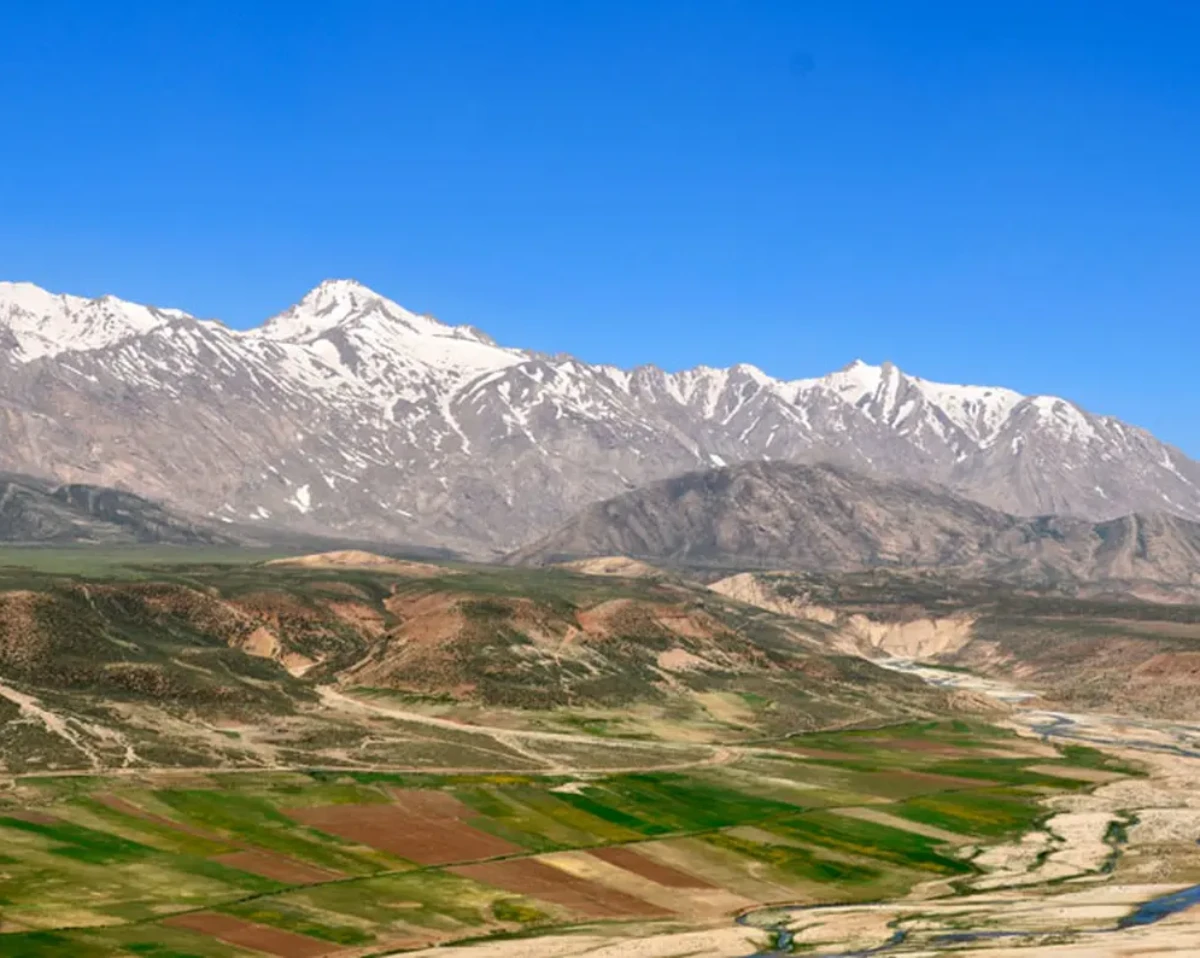
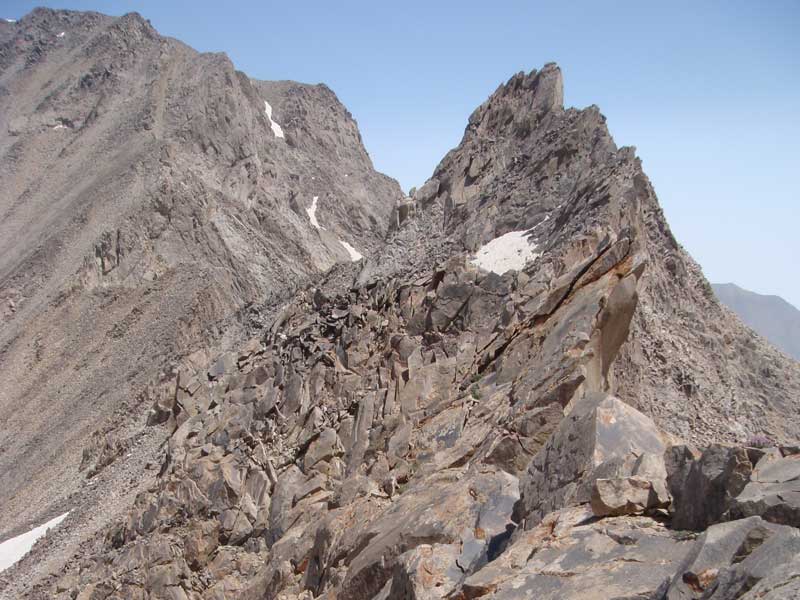
Zard Kuh, commonly written as Zardeh Kuh, Zard-kuh, or Zardkooh, is a beautiful sub-range of mountains located in the stunning Zagros Mountains of Iran. It is a place of great heights, ice fields and awesome animal and plant life. It rises above 4,200 meters and attracts climbers with its difficult ascents and gorgeous scenery.
Zard Kuh is a place where nature and culture interweave, as it has always been a main water source for the rivers flowing through the region, besides being an ancient route for the Bakhtiari nomads. To put it in another way, Zardeh Kuh is a hidden jewel that invites both climbers and nature enthusiasts to explore its depths.
Your trip to Iran begins smoothly with our Iran airport transfer services.
Geology and Natural Features of Mount Zard-Kuh
The geology of Mount Zard-Kuh is a result of the Zagros orogeny: tectonic forces folded Cretaceous limestone with shale, which eventually created ridges, cliffs and valleys over millions of years. The Zard Kuh history is one of ancient continental collision revealed in the rocks.
The Zard-Kuh has unique features, including Zagros’ only permanent glaciers (Iluk, Porsonan, Khorasan), which are sustained by 800-1200 mm of annual precipitation (mostly snow). These glaciers will be the source of springs, streams, lakes and rivers like Karun (the longest in Iran), Zayandeh Rud, Kuhrang and Bazoft that are necessary for irrigation, power and ecosystems in dry areas of Iran.
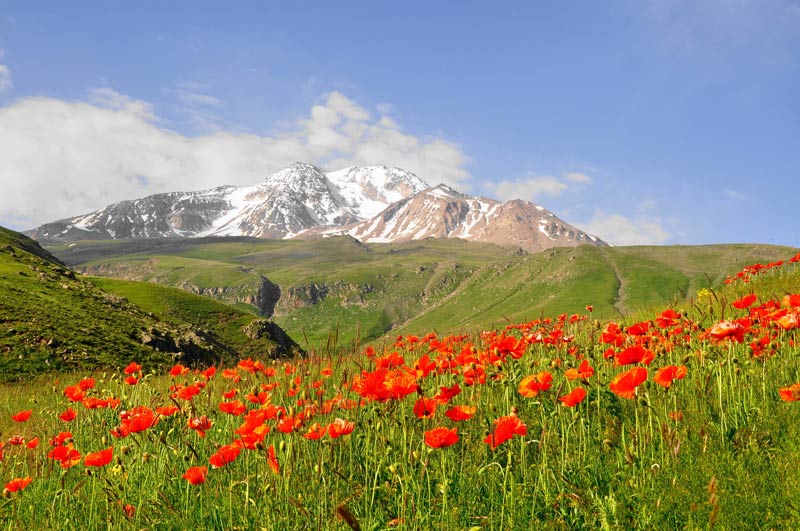
Alpine meadows of tulips, lilies, thyme, and celery are the vegetation of Zardeh Kuh, which flourishes in spring/summer; the lower slopes have hilly oaks and maples of the Zagros, plus hundreds of medicinal plants.
The wildlife includes Persian leopards, rare Asiatic cheetahs, wolves, goats and raptors. All these animals and plants make Zard-Kuh a very important place for both conservation and ecotourism.
also read: ski tour iran
Zard Kuh Summit Routes
The main routes to Zard Kuh’s peak differ significantly in terms of their level of difficulty and attractiveness.
The Northern Ridge Route starts near the Kuhrang dams through Chal Mishan. It requires steep scrambling on loose limestone and ridges that are at times open to the sky. The difficult route is only suitable for semi-professional and professional climbers. It takes 8-10 hours.
The Eastern (Khadang) Route goes up through the gorge of Khadang and then passes by the second dam of Koohrang. The fastest way in good weather, but it is also the most prone to avalanches. The difficulty is moderate, perfect for semi-professionals (professionals in winter). It takes 6-8 hours.
The Eastern Ridge Route originates from the Khorasan camping site, which is mainly for winter ascents, requiring ice axes and crampons on steep ice. It is the most difficult route, reserved for professional climbers. It takes 7-9 hours.
Novices are advised to go with a guide on easier routes with the right equipment and acclimatization.
also read: damavand tour
The Camps on Zard Kuh
The ascent paths of Zard Kuh are dotted with important camps and shelters that serve as essential rest points. Chal Mishan shelter is the starting point of the North Ridge route (at about 3,600 meters). It is a perfect spot to sleep overnight to help your body get used to the higher altitude.
Likewise, the Khorasan shelter at an elevation of 3,800 meters is a support for the Eastern routes, providing very basic protection from the elements.
These camps are of great importance for climbs lasting more than one day, as they give climbers a chance to take a break, store their gear and gradually get used to the high altitude, thus lowering the risk of getting sick from the high altitude.
Safety tips: It’s always a good idea to check the weather forecasts before camping for safety reasons, secure your tents against strong winds, and take along enough water and food. Do not camp alone in isolated areas; let the local authority know your plans. The management of waste disposal conserves the natural environment.
also read: iran ski resorts
Our Iran Budget Tours let you see more, spend less, and create memories that last a lifetime.
Geographical Location of Zard Kuh
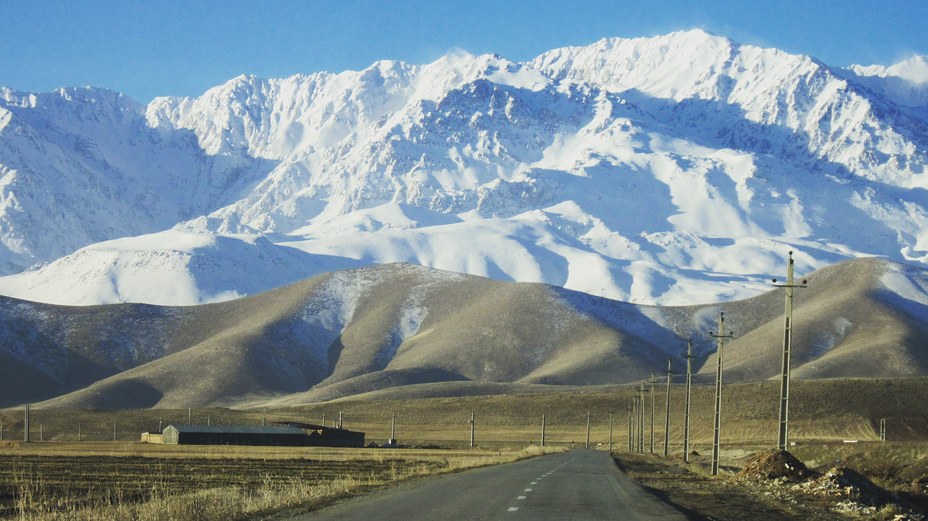
Zard Kuh is in the Chaharmahal and Bakhtiari Province of central Iran in the Zagros Mountains. The city is only 200 km west of Isfahan, and near towns of Shahrekord and Kuhrang. This range, stretching from the northwest to the southeast, is a part of the Sanandaj-Sirjan geological zone that is bordered by deep valleys and alpine meadows.
It can be reached through dirt roads from Chelgerd, being very close to the Chelgerd Ski Resort and Koohrang Tunnel. The region not only supports nomadic migrations but also plays a role in the irrigation that is really important to the rivers of Iran, thus being significant for both ecology and tourism in the area.
also read: Sabalan Mountain
Zard Kuh’s Highest and Most Significant Peaks
Zard Kuh has several famous peaks, among which Kolonchin is the highest one, exceeding 4,220 meters, hence, being the legendary summit and the second highest in the Zagros after Dena. Apart from these, the other notable peaks are Shah-e Shahidan and Haft Tanan; the latter provides a good view of the former.
Moreover, the entire range of Zard Kooh has a huge influence on mountaineering activities with its non-technical summer hikes and even more challenging winter alpinism, attracting climbers. Nature tourism benefits from these mountains as they are located in an area of varied wildlife and beautiful scenery.
Thus, it attracts eco-adventurers and photography enthusiasts. The rocks’ sharp and irregular limestone contours are amongst the attractions that make Zard Kuh so popular and easily accessible for all kinds of outdoor activities.
also read: damavand trekking
Best Time to Climb Mount Zard-Kuh
Information regarding the most appropriate times for the Zard-Kuh ascent is as follows:
- Best times: St. August–September-the weather was stable, snow melted, a day temperature of 10–20°C, easy-to-see trails, and blooming of flowers.
- Spring (May–June): Gorgeous flowers but unsteady weather and avalanche hazards; winter equipment is required.
- Summer: Good access, though hot midday.
- Winter (November-April): Extreme cold, deep snow, high avalanches—only for pros with ice tools.
Safety warnings: Watch sudden storms, start early and prepare for altitude issues. Blizzards/winds can be fatal; prefer guided climbs.
also read: Sabalan Tour
Safety and Travel Tips for Zard-Kuh Trekking
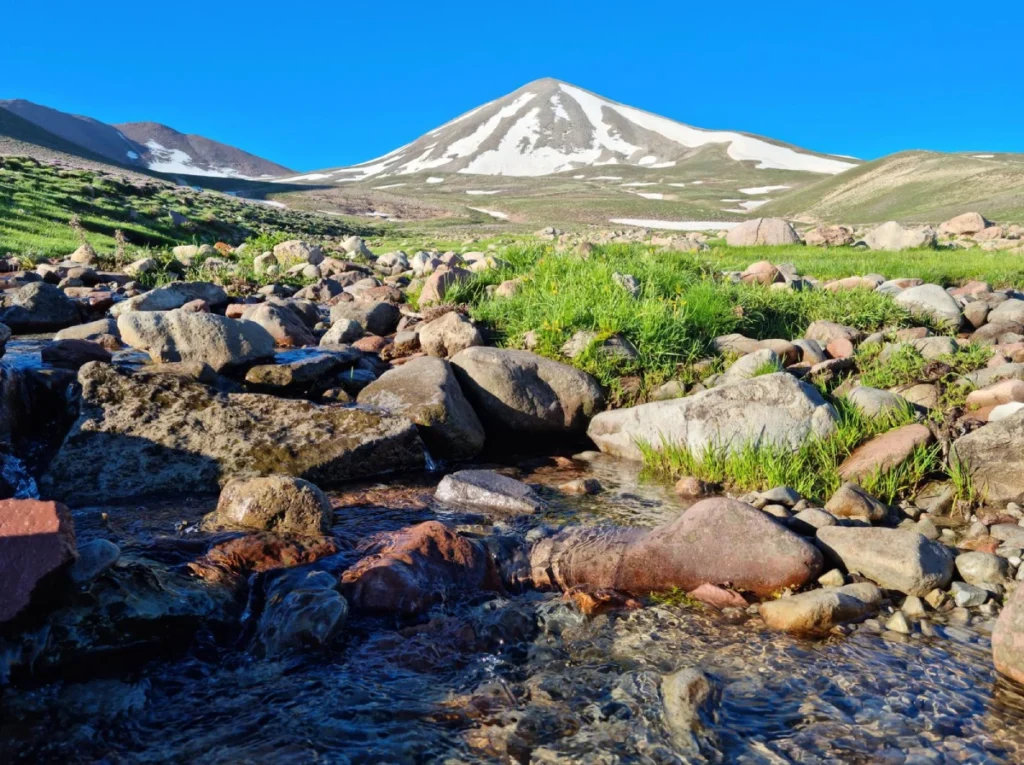
Hire a guide or join a tour. Zard-Kuh is remote and rugged. Local mountain guides or organized tours greatly improve safety, since they know the terrain and weather patterns. Even Iranian sources warn that Zard-Kuh winter routes require advanced skills, so beginners should never climb solo.
Acclimatize properly. The summit is above 4,200 m. Build your trek with stages: many teams sleep overnight at the Chal Mishan or Khorasan shelters (around 3,600–3,800 m) before attempting the top. Stay hydrated and climb slowly to minimize altitude sickness.
Pack proper gear. The trails are steep and may hold snow. Sturdy hiking boots and trekking poles are essential. In summer the normal routes are non-technical, but if your trek extends into late autumn or spring you must pack ice axes, crampons and a rope, as snowfields and ice appear above ~3,500 m. Always carry warm layered clothing, a waterproof rain jacket, a quality tent and sleeping bag, plus sunglasses and sunscreen (the sun is strong at high altitude).
Watch weather and avalanche risk. The Zagros weather can change rapidly. Check forecasts frequently, and aim to start summit climbs early in the morning. Avoid traversing or crossing gullies after fresh snow. Local climbers recommend the mid- to late-summer window (August–September) for minimal avalanche hazard. If heavy snow is on the ground, turn back and reevaluate.
Travel logistics. The usual approach is via Shahrekord (the provincial capital) to Chelgerd. From Chelgerd a side road leads to the second Koohrang tunnel (about 10 km of dirt road)– this is the common trailhead. For context, Chelgerd is about 200 km west of Isfahan. There is no strict “climbing permit” for Zard-Kuh, but you should travel in groups, carry passports/visas, and inform local authorities or rangers of your plan.
Respect local culture. The Bakhtiari tribes live in these mountains year-round. They are famed for their hospitality and cultural traditions. Follow local customs: dress modestly in villages, ask permission before photographing people or nomadic camps, and consider hiring local muleteers or donkeys to help with camping gear. Tipping guides or helpers (even a small amount) is customary in Iran and appreciated.
If this destination is now on your bucket list, don’t forget to check out the Iran visa application process.
FAQs
How difficult is climbing Mount Zard-Kuh?
Even in summer, Zard-Kuh is a strenuous trek. The routes involve long days of steep uphill hiking at high altitude (4,000+ m) with exposed ridgelines and loose rocks. While the summer routes are not technical rock climbs, they demand excellent fitness and good trail skills. Winter climbs are very difficult, requiring ice gear and avalanche expertise. In short, treat Zard-Kuh as a serious expedition – not a casual hill walk.
Do I need a permit or guide for Zard-Kuh?
There is no special national “permit” required to climb Zard-Kuh beyond the standard tourist visa you use in Iran. However, the region’s remoteness means that hiring a licensed guide or tour company is strongly recommended for safety and logistics. Local guides can arrange transport, lodging and mule support, and help in an emergency. Foreign trekking groups should register their itinerary with local authorities or the police, and always travel with proper documentation. In general, informed planning and respect for local regulations make a trek to Zard-Kuh much smoother and safer.