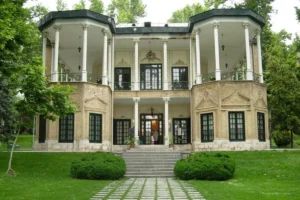
Niavaran Palace Complex, a living historical record of the royal history in Iran, is located on the verdant northern foothills of Tehran. The majestic niavaran palace complex tehran, is a mixture of Persian culture and the sophistication of the world. It was the summer residence of the Qajar and Pahlavi kings.
It covers green gardens, grandiose palaces and specialized museums, so it is one of the most important cultural sites in the Iranian region.
Niavaran Complex is a masterpiece that will impress every visitor, whether you love Tehran’s luxuries or history. Explore its rich history, its beautiful architecture, and its chosen collections. This is where your royal travel starts!
Niavaran Palace Complex History
The history of Niavaran Palace Complex dates back to the year 1806 when Agha Mohammad Khan Qajar decided to have a garden getaway at the cool Niavaran valley. In 1833, Fath-Ali Shah built the Ahmad Shahi Pavilion which was a Qajar masterpiece with halls full of mirrors and peaceful courtyards. The site developed through Nasser al-Din Shah, and he included pavilions and inscriptions.
Reza Shah Pahlavi modernized the grounds in the 1930s. It became a main residence of his son Mohammad Reza Shah starting in 1968, the construction of the smooth Sahebgharanieh Palace. The Niavaran Palace Historical Cultural Complex hosted world leaders and represented the cosmopolitan aspirations of Iran.
It was transformed into a museum in 1983 after the 1979 Revolution that kept more than 3,000 royal objects, including gowns, jewels and documents, showing the transformation of Iran into a republic after being a monarchy.
Niavaran Palace Complex Architecture
The Niavaran Palace Complex is a breathtaking architectural wonder. The White Palace, built in the 1960s by Mohsen Foroughi, combines modernist elements with Persian influences. The large glass walls embrace views of the Alborz, and the marble floors are adorned with intricate Islamic geometries. They feature themed salons with interiors inspired by Moroccan arabesques, Chinese lacquer screens, and a large mural of ancient Persian kings.
The elder Green Palace is charmed by Qajar style: it has a lion-headed fountain in its courtyard, the stucco facades are shiny, mirrored vaults reflect the eternal light. Terraced gardens are cascaded with fountains, rare plants and poetic carvings on rocks. These Niavaran Palace Complex photos are the embodiment of this dreamy fusion of East and West, and this aspect turns it into an Instagram-worthy work of design.
also read: iran cultural tours

Sahebgharanieh Palace
The Sahebgharanieh Palace, also known as the White Palace, is one of the most impressive palaces in the complex. Built during the Pahlavi dynasty, the palace is decorated with a mix of European and Iranian art, including paintings, sculptures, and tapestries. The palace also features several rooms decorated in different styles, including a Moroccan-style room, a Chinese-style room, and a room with a giant mural depicting Iran’s history.
If you’re planning your trip, make sure to read our comprehensive Tehran Travel Guide first.

Ahmad Shahi Pavilion
The Ahmad Shahi Pavilion, also known as the Green Palace, is another popular palace in the complex. Built during the Qajar dynasty, the palace served as a summer residence for the royal family. The palace features a central courtyard with a pool, as well as a collection of paintings and artifacts.For travelers fascinated by Iran’s royal heritage and cultural landmarks like Niavaran Palace, our Iran Cultural Tour in 8 Days offers a perfect opportunity to explore the country’s rich history and timeless beauty.
Niavaran Palace museum
The Niavaran Palace Museum features the personal belongings of the last Shah of Iran, including his clothing, jewelry, and some of his cars.
also read: hormuz island Travel Guide
Sahebgharanieh museum
The Sahebgharanieh Museum showcases a variety of Iranian and European art, including paintings, sculptures, and ceramics.
Ahmad Shahi Pavilion museum
The Ahmad Shahi Pavilion Museum features a collection of traditional Persian arts and crafts, including calligraphy, embroidery, and miniature paintings.

Jahan Nama museum
The Jahan Nama Museum displays a collection of paintings by contemporary Iranian artists.
special car museum
The Special Car Museum of Niavaran Palace Complex includes a collection of the Shahs of Iran’s special cars, including cars made during the Pahlavi era and after the revolution. The museum was opened in 2004 and displays cars from famous brands such as Rolls-Royce, Bentley, Jaguar, Ferrari, and Lamborghini. Additionally, the museum contains historical documents and photos related to the showcased cars.
Our Iran Budget Tours offer smart travelers the chance to experience Persia’s wonders affordably and authentically.
The Jahan Nama garden
The Jahan Nama Garden features a variety of trees, flowers, and fountains, as well as several pavilions and tea houses.
The Ahmad Shahi garden
Visitors can also explore the Ahmad Shahi Garden, which includes a beautiful waterfall and several paths and trails that wind through the surrounding hillsides. Planning a trip? Don’t forget to check the Iran visa application process.
The Inscription garden
The Inscription Garden of the Niavaran Palace Complex is another interesting part of the complex. The garden contains a series of historical Inscriptions that refer to different historical periods. These inscriptions are located along the garden’s walls and are very attractive to visitors interested in Iranian history and culture. Moreover, the Inscription Garden offers a beautiful view of Tehran and is suitable for walking and hiking.
Get to your hotel quickly and safely with our Iran airport transfer service.
Niavaran Palace Complex Tickets
Niavaran Palace Complex is also affordable and easy to visit. The price of foreign tickets to major palaces in 2025 is approximately 50,000-100,000 Tomans; a local requires paying
5,000 Tomans. An extra charge of 4,000-10,000 Tomans is charged in separate
museums (Jahan Nama Art Gallery, Royal Car Museum). Hours 8 AM -5 PM
(fall/winter), 7 PM (spring/summer). Buy on-site; combo passes save 20%.
English guided tours: 20,000 Tomans. You do not need a reservation; book
holidays online.
Niavaran Palace Complex Weather
The Niavaran Complex is supported by the microclimate in Northern Tehran. The spring (March-May) and early fall (September-October) have 15- 25 °C (59- 77 °C), which is heavenly regarding garden strolls. Summers reach 35 °C (95 °F); winters reach 0 °C (32 °F) with infrequent snow. It will be 18 °C = 64°F on the 29th of October, 2025, and 10 °C = 50 °F in the evenings, so it will be good to go around. Pack comfy footwear and sunscreen; rain is minimal.
Niavaran Palace Complex Reviews & Conclusion
The Niavaran Palace Complex reviews shine on TripAdvisor (4.4/5, 373+ reviews), with the most favorable reviews being about “astounding gardens and opulent interiors—plan 2–3 hours!” Visitors raved about the guides and the quietness of the area, while a few pointed out the lack of signs. “A peaceful journey back to the time of Iran”.
The Niavaran Palace Complex is specifically a place where history, art, and nature, all combined together, for the most part, into an unforgettable experience. The architecture of the Qajar pavilions to the Pahlavi modernism reflects Iran’s very essence.
Capture Niavaran Palace Complex Photos, contemplate its legacy, and allow Niavaran Palace, Tehran, to make your Tehran trip even more splendid. Book with Irun2Iran now!
Whether you’re a solo traveler or part of a group, Iran Tour Packages provide an unforgettable adventure through one of the Middle East’s most captivating destinations.